
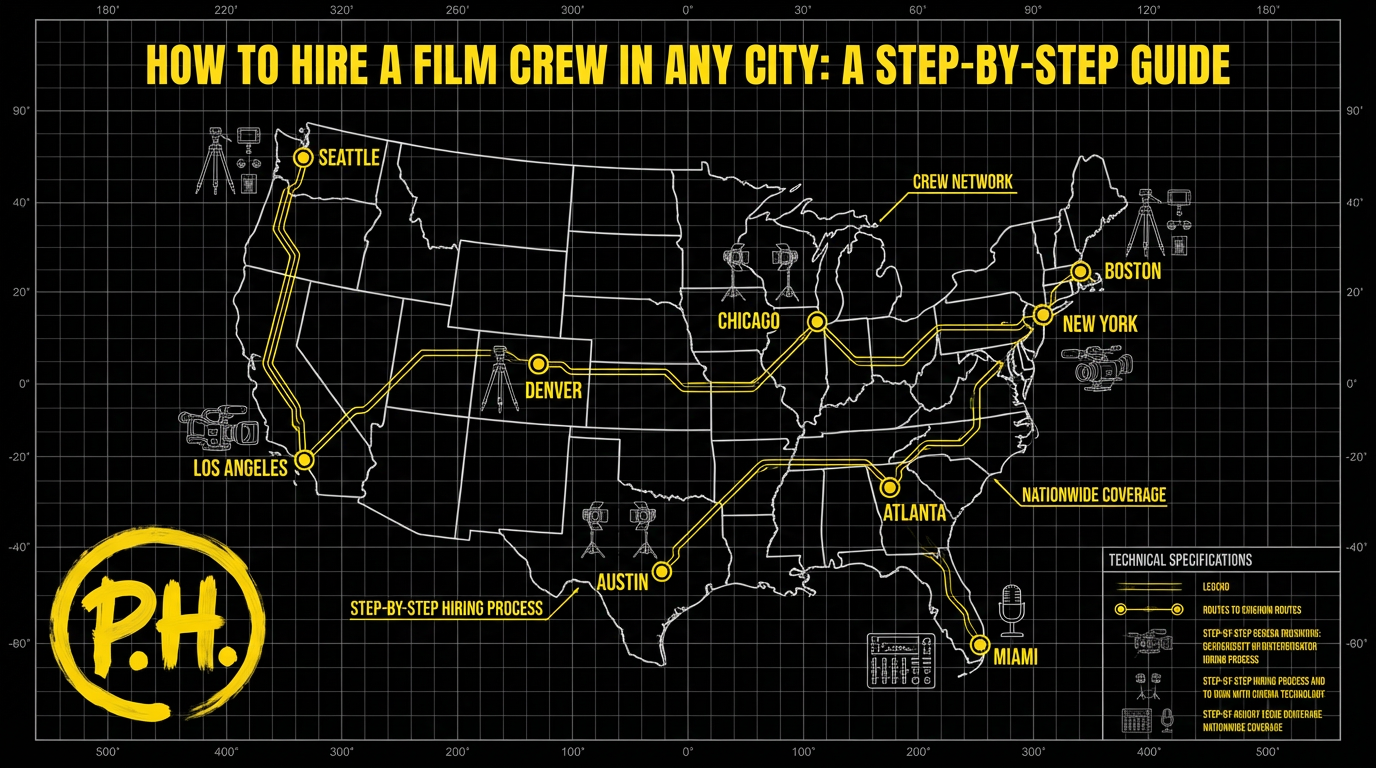
How to Hire a Film Crew in Any City: A Step-by-Step Guide
Hiring a film crew in an unfamiliar city can feel overwhelming, especially if you’re producing your first commercial, interview, documentary, or branded video. Crew roles vary, local rates change by region, and details like permits and gear logistics can slow a project down fast if you’re not prepared.
The good news? With the right process, hiring a reliable film crew in any city becomes straightforward. This step-by-step guide breaks down exactly how to plan your crew, set realistic budgets, avoid common mistakes, and find trusted professionals wherever your production takes you.
Step 1: Define the Crew Roles You Actually Need
Before you search for crew, you need clarity on who you’re hiring and why. Over-hiring wastes budget; under-hiring risks quality.
Common film crew roles include:
- Director of Photography (DP): Oversees the visual style, lighting approach, and camera movement.
- Camera Operator (Cam Op): Operates the camera under the DP’s direction.
- 1st Assistant Camera (AC): Handles focus pulling, lens changes, and camera setup.
- Sound Mixer / Audio Technician: Captures clean dialogue and ambient sound.
- Gaffer: Manages lighting execution.
- Grip: Supports lighting, rigging, and camera movement.
- Production Assistant (PA): Helps with logistics, releases, and on-set support.
For smaller shoots, one person may cover multiple roles. For larger productions, separating responsibilities ensures efficiency and quality. Clearly defining roles upfront helps you get accurate quotes and avoids confusion later.
Step 2: Set a Realistic Budget Based on City Size
Film crew costs vary significantly depending on location. Understanding regional differences helps you budget correctly and avoid sticker shock.
General daily budget ranges (crew only):
- Small markets: $1,200–$2,500
- Mid-size cities: $2,500–$5,000
Major production hubs: $5,000–$10,000+
Major cities often have higher rates due to union presence, cost of living, and demand. Smaller cities may offer more flexibility, but availability can be limited. Always ask what’s included—camera gear, audio kits, lighting, or travel time—so you’re comparing apples to apples.
Step 3: Decide What Gear Is Required (and Who Provides It)
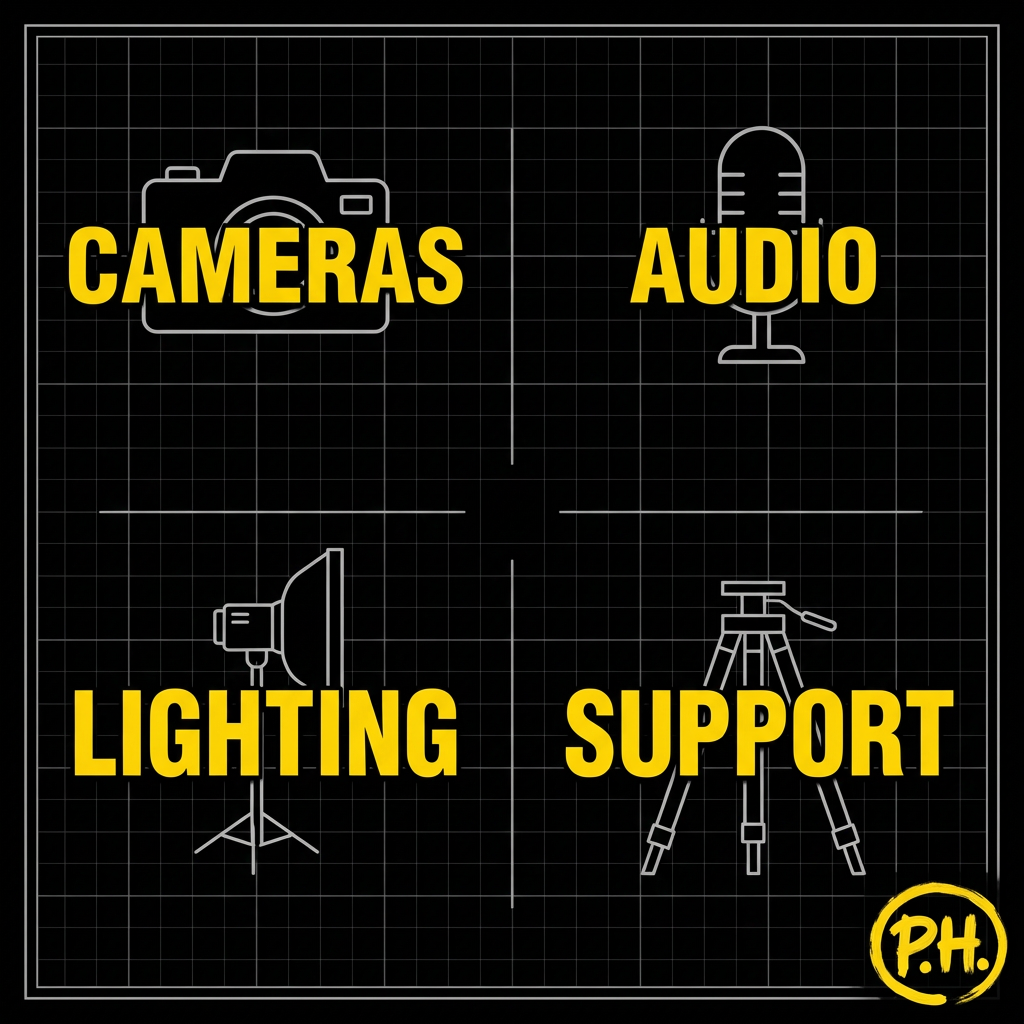
One of the most common mistakes producers make is assuming gear is included—or included at the same level everywhere.
Key questions to answer early:
- Do you need cinema cameras or broadcast-style setups?
- Will audio require wireless lavs, boom microphones, or both?
- Is lighting minimal or fully built?
- Are tripods, sliders, or gimbals needed?
Some crew members own full kits, while others rent locally. Clarifying gear needs early prevents last-minute scrambling and budget overruns.
Step 4: Understand Local Rules, Permits, and Logistics
This is where many productions get stuck.
Each city has its own rules for:
- Filming permits
- Location permissions
- Public vs private spaces
- Insurance requirements
Local crew are invaluable here. They understand which permits are required, how long approvals take, and when filming can proceed without paperwork. Hiring people familiar with local regulations saves time and protects your production legally.
Step 5: Know Where Producers Usually Get Stuck

Even experienced producers run into issues when hiring out-of-town crews. Common roadblocks include:
- Not knowing fair local rates
- Hiring crew who don’t communicate clearly
- Underestimating travel or setup time
- Mismatched expectations about deliverables
Difficulty comparing quotes from different markets
These issues usually stem from fragmented information and inconsistent sourcing methods.
Step 6: Use a Centralized Platform to Find and Compare Crews
Instead of searching city by city, emailing blindly, or relying on outdated lists, modern producers are turning to centralized directories.
Platforms like ProductionHelp.io simplify the process by organizing vetted film crews by city, role, and service type. Instead of starting from scratch in every market, you can quickly identify professionals, understand local norms, and make informed decisions faster.
This approach saves time, reduces risk, and keeps productions moving—especially for multi-city shoots or tight timelines.
Step 7: Confirm Details Before Booking
Before locking in your crew, confirm:
- Call times and shoot duration
- Overtime policies
- Gear lists and backups
- Payment terms
- Cancellation policies
A quick confirmation call or written summary prevents misunderstandings and sets expectations on both sides.

Conclusion
Hiring a film crew in any city doesn’t have to be complicated. When you define roles clearly, budget realistically, account for local logistics, and use the right tools, the process becomes predictable and repeatable.
Whether you’re producing a one-day interview or a multi-city campaign, following these steps will help you crew smarter, avoid delays, and deliver professional results—no matter where the shoot takes place.