Real Production Questions Answered: What Working Crew Say About Budgets, Gear, and Rates
If you’ve spent any time producing—whether it’s a corporate interview, a branded doc, a live event, or an indie short—you already know this truth: most production questions don’t have clean, universal answers.
Budgets depend on context. Gear choices depend on the job. Rates depend on location, experience, and expectations. Yet new producers, clients, and even experienced coordinators often get stuck asking the same questions—usually because no one explains why the answer changes from shoot to shoot.
This article pulls together real production questions that working crew hear all the time. The answers are written from a practical, on-set perspective—no theory, no sales language, no fluff. Just the kind of guidance you’d expect if you asked a seasoned DP, producer, or line producer over coffee before a call time.
Why These Questions Keep Coming Up
Production is one of the few industries where:
- Two projects with the same runtime can have wildly different costs
- The same role can mean different responsibilities depending on the shoot
- Gear decisions affect not just image quality, but crew size, timing, and risk
Most confusion comes from misaligned expectations, not bad intentions. Clients want clarity. New producers want confidence. Crew want realistic scopes. These questions sit right at the intersection of all three.
That’s why community-driven answers—grounded in real-world experience—matter.
Question 1: “Why Do Production Budgets Vary So Much for Similar Projects?”
Short answer: Because the scope is never actually the same.
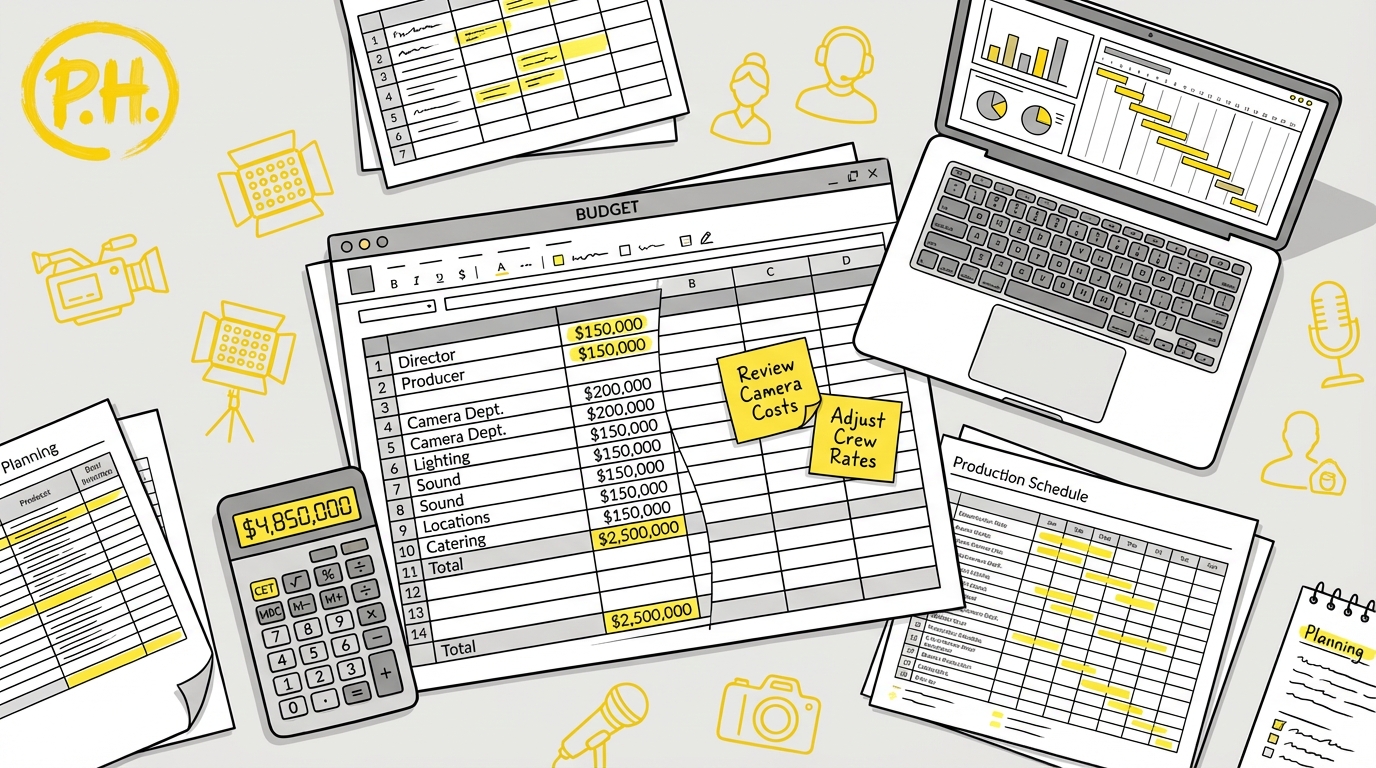
From a working producer’s perspective, budgets are driven less by the final video length and more by how the shoot is executed.
Key budget variables include:
- Crew size and roles
A two-person crew (DP + audio) is very different from a five-person crew with a gaffer, AC, and PA. - Shoot duration
A “half-day” that creeps into overtime changes rates, meals, and crew availability. - Location complexity
One controlled office location vs. multiple locations with travel, permits, or security. - Client expectations
A simple internal video and a brand-facing campaign may look similar on paper but require very different lighting, coverage, and polish.
What working crew see often:
Producers underestimate pre-production and overestimate how much can be captured in a short window. When expectations are realistic, budgets stabilize quickly.
Question 2: “Is It Ever Okay to Cut Crew to Save Money?”
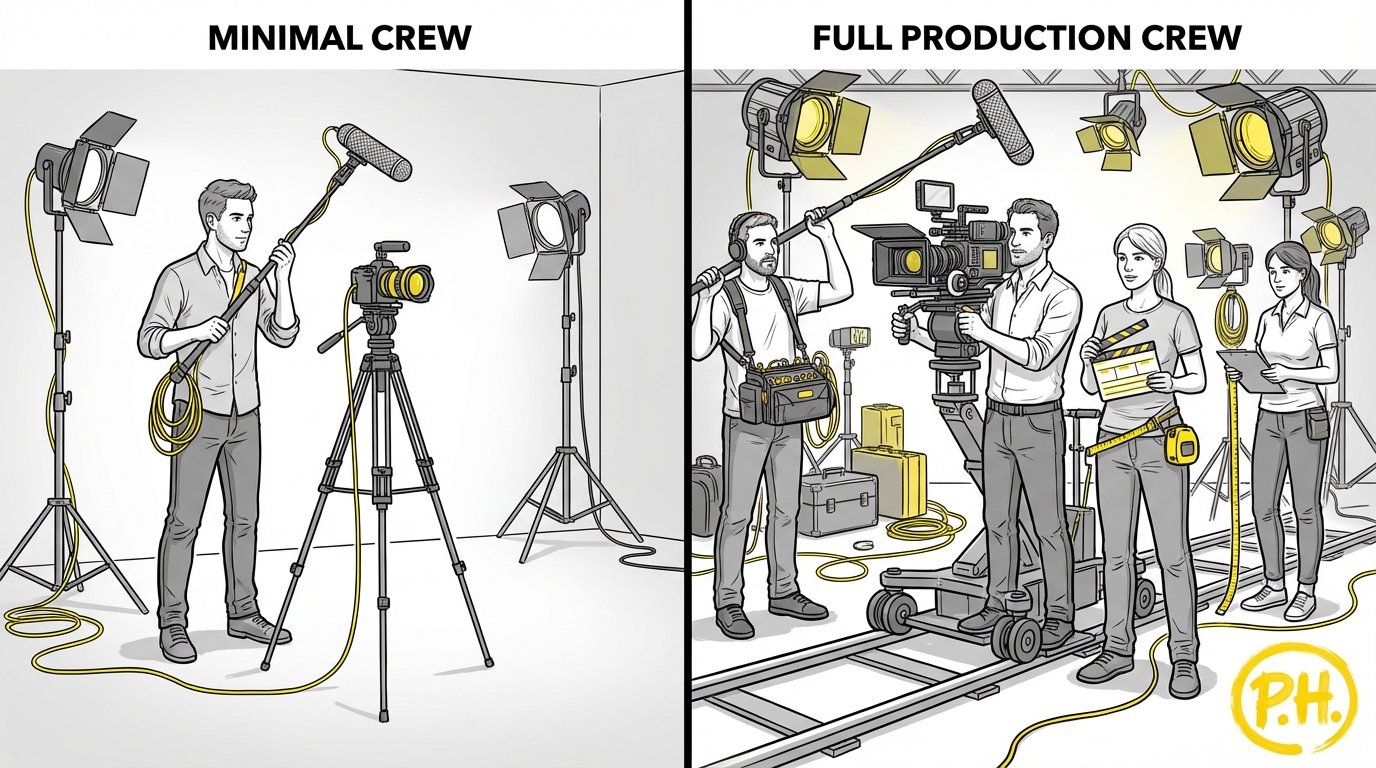
Short answer: Yes—but only when it’s intentional and understood.
Cutting crew isn’t automatically a bad decision. It becomes a problem when:
- Responsibilities aren’t redistributed clearly
- Quality expectations stay the same
- The schedule doesn’t change
For example:
- A solo operator can work for a sit-down interview if lighting is simple and audio is controlled.
- Removing a gaffer might be fine for natural-light shoots—but not for brand-critical work with multiple setups.
What working crew want producers to know:
Smaller crews mean tradeoffs, not shortcuts. When everyone agrees on those tradeoffs upfront, shoots run smoothly. When they’re discovered on set, stress and mistakes follow.
Question 3: “Do We Really Need That Much Gear?”
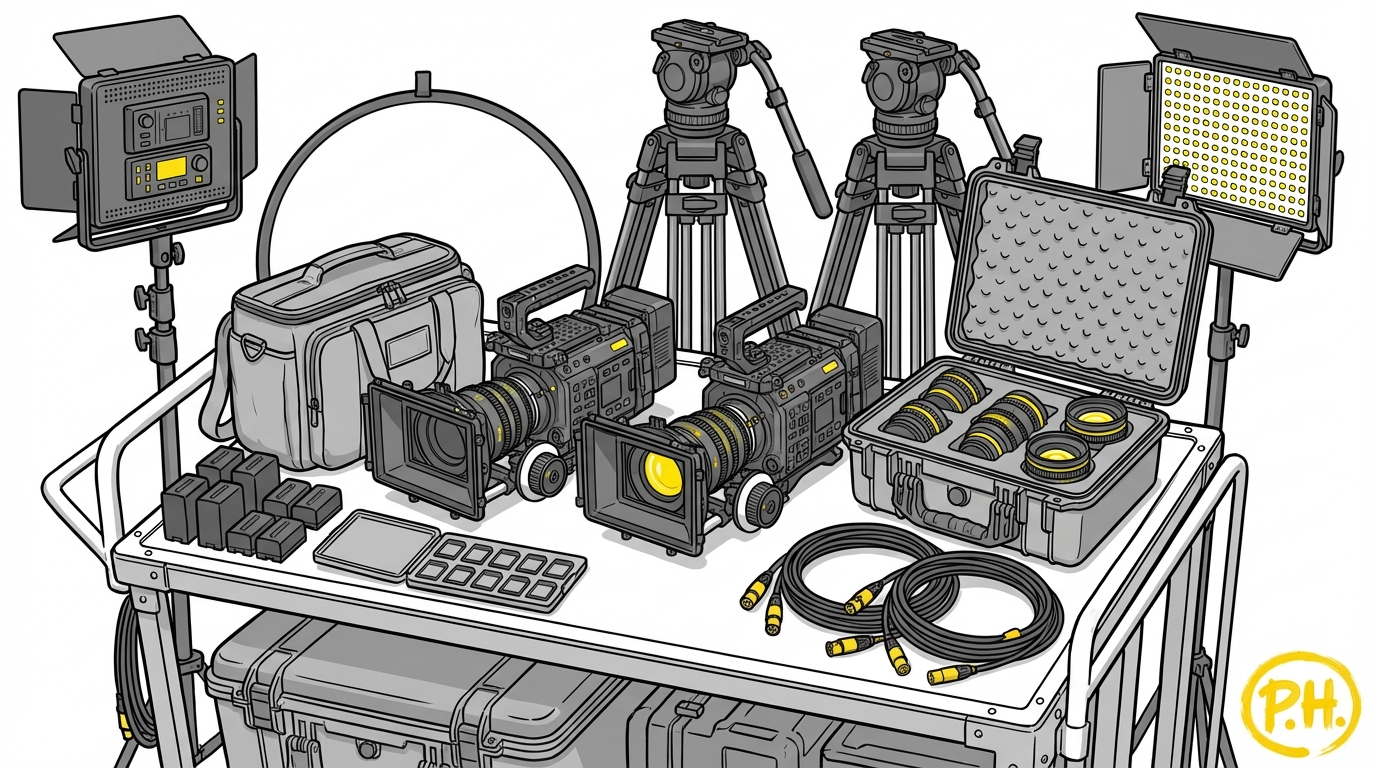
Short answer: Not always—but the gear list usually exists for a reason.
Producers often see gear as a cost line item. Crew see it as insurance.
Extra gear accounts for:
- Backup in case something fails
- Faster transitions between setups
- Consistent image quality across locations
That doesn’t mean every shoot needs a truck full of cases. It means gear should match:
- The complexity of the shoot
- The number of locations
- The tolerance for risk
Common misconception:
“More gear = overkill.”
In reality, under-equipping a shoot often leads to delays, reshoots, or compromised footage—which costs more later.
Question 4: “Why Are Day Rates So Different by City?”
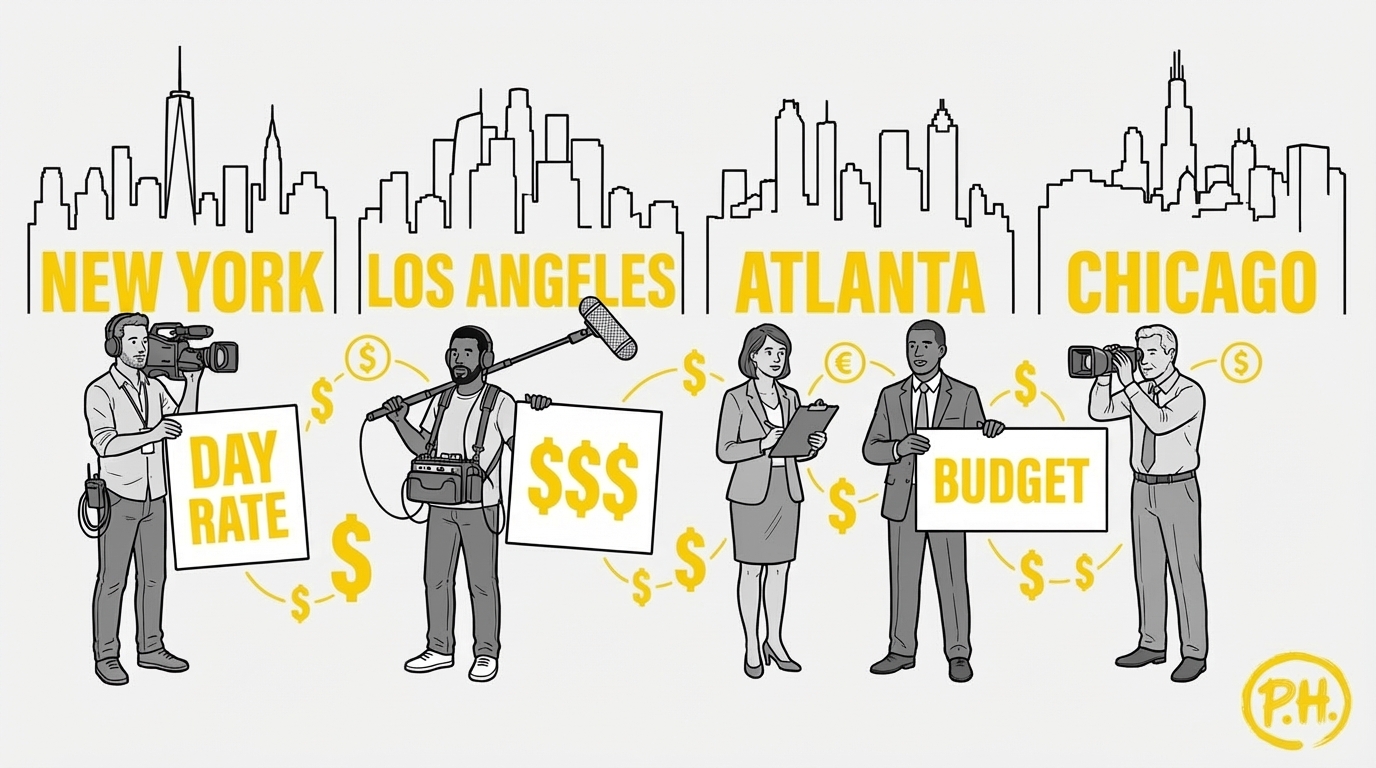
Short answer: Cost of living, demand, and local production volume.
Crew rates aren’t arbitrary. They reflect:
- Local living costs
- Frequency of available work
- Market demand for certain skills
A camera operator in a major production hub may charge more—but they’re also:
- Used to faster-paced sets
- Familiar with complex workflows
- Expected to self-manage more responsibility
What working crew say:
Rates aren’t just about skill—they’re about reliability, efficiency, and the ability to solve problems without slowing the shoot.
When producing in a new city, this is where local insight matters. A directory by city—paired with real answers from local professionals—helps producers budget accurately instead of guessing.
Question 5: “What’s the Difference Between a Camera Operator and a DP?”
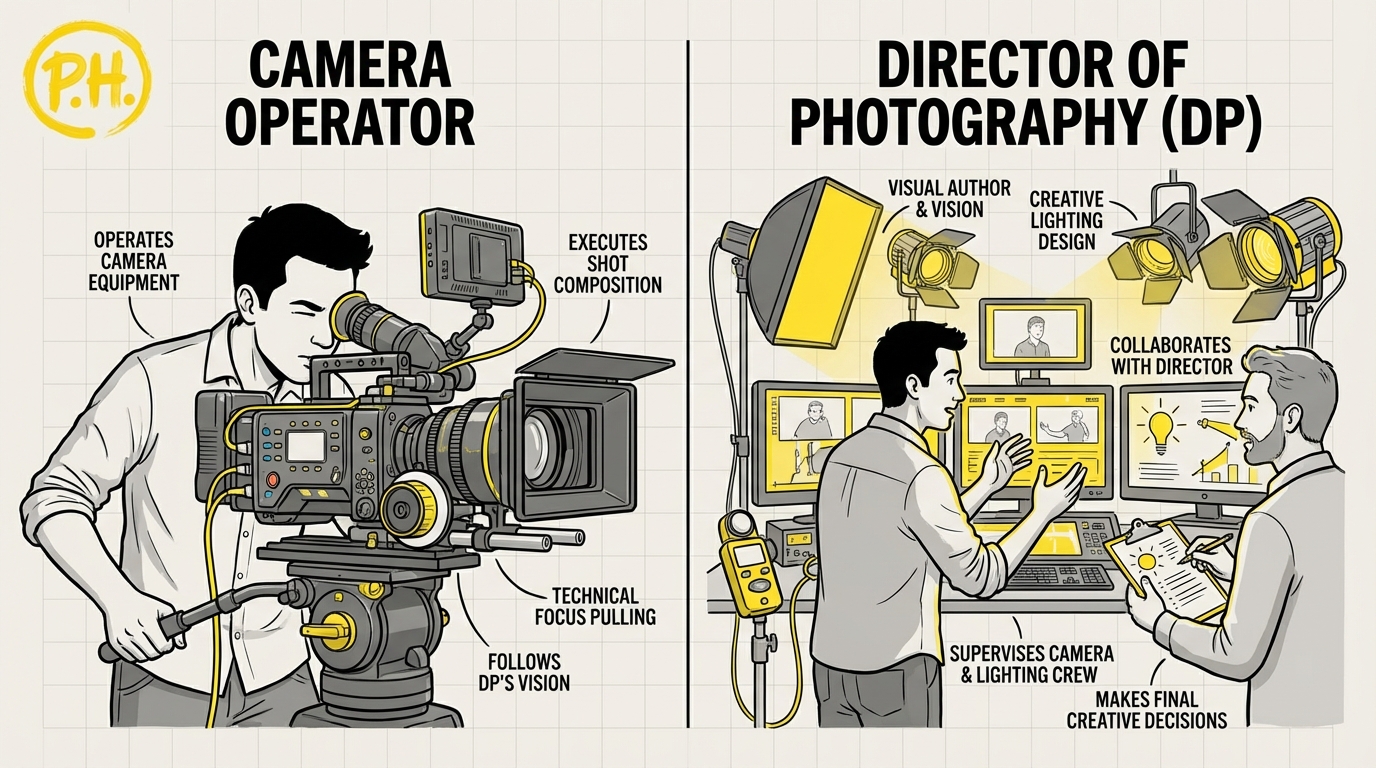
Short answer: Responsibility and creative ownership.
This confusion is extremely common, especially in corporate and branded work.
Generally:
- A camera operator executes shots based on direction
- A Director of Photography (DP) designs the visual approach
On smaller shoots, one person may do both. On larger productions, the distinction matters a lot.
What working pros see go wrong:
Hiring a camera operator but expecting DP-level creative leadership—or hiring a DP without budgeting for the crew they need to execute the vision.
Clarity here prevents mismatched expectations on set.
Question 6: “Why Does Audio Seem to Get Overlooked Until It’s Too Late?”
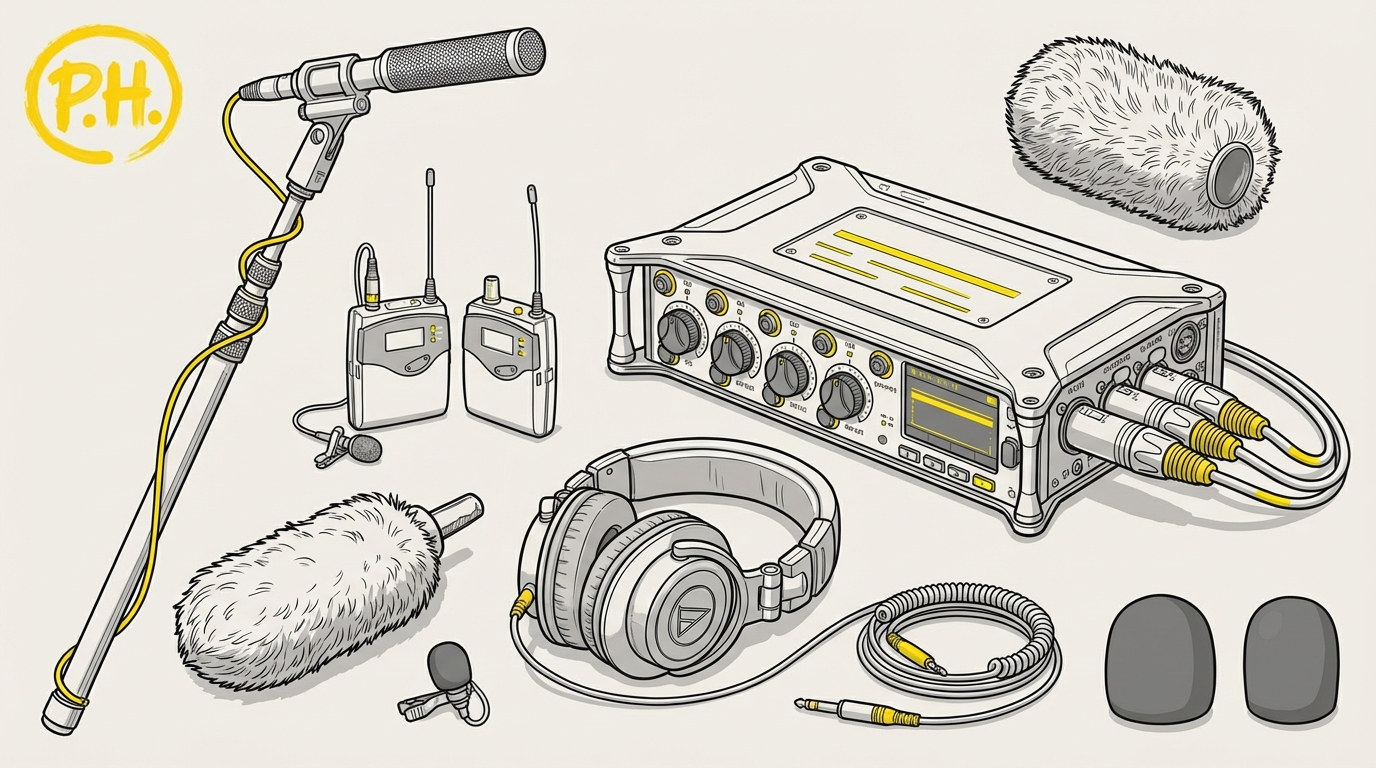
Short answer: Because it’s invisible—until it fails.
Producers new to video often focus on cameras and lighting. Audio is quieter, less flashy, and often misunderstood.
But poor audio:
- Can’t be fixed easily in post
- Distracts viewers more than imperfect visuals
- Makes otherwise strong content unusable
What working audio techs wish clients knew:
Good audio requires planning—mic choice, room control, monitoring—not just “throwing on a lav.”
Budgeting for proper sound saves time and protects the final product.
Question 7: “Is Overtime Really That Big of a Deal?”
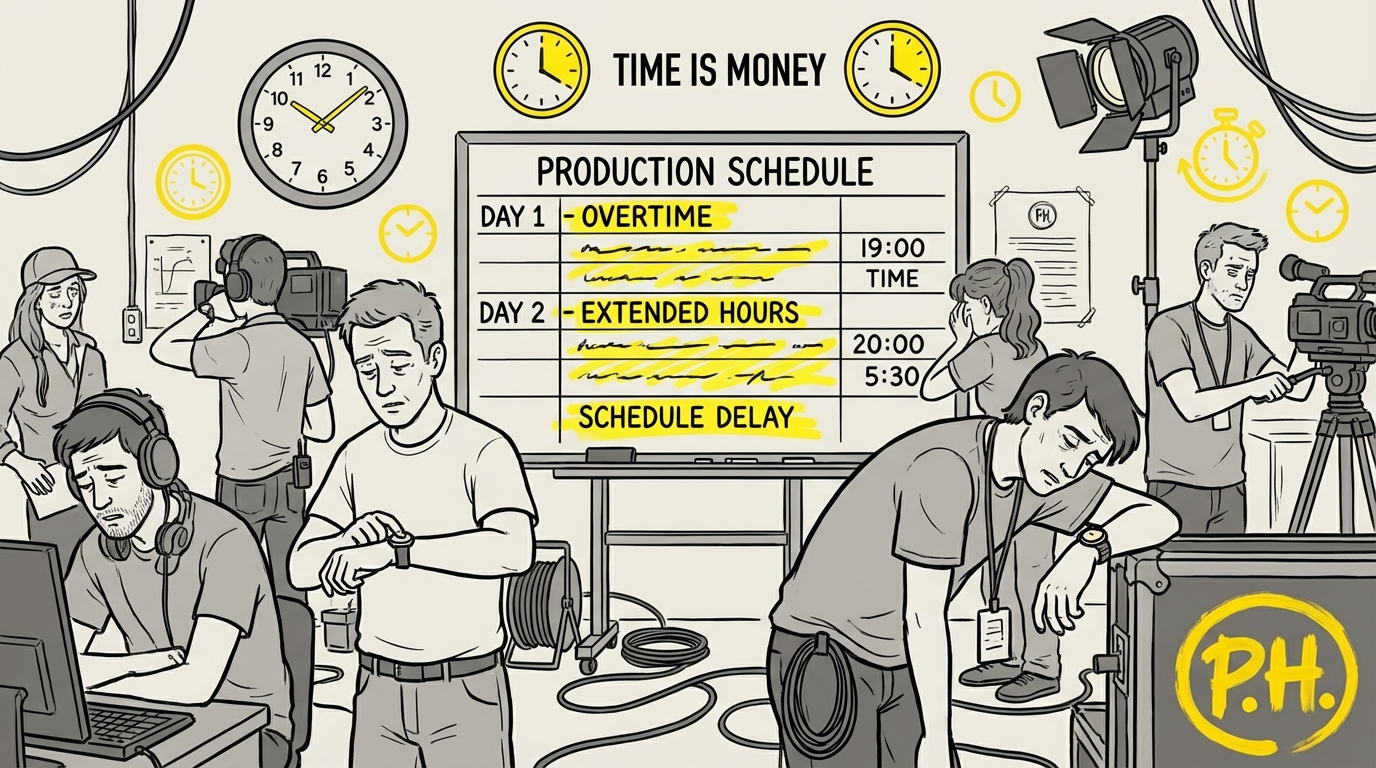
Short answer: Yes—and it compounds fast.
Overtime isn’t just an hourly add-on. It affects:
- Crew fatigue
- Morale
- Quality of decision-making late in the day
What starts as “just 30 more minutes” can push multiple departments into overtime simultaneously.
Working producer insight:
Building realistic schedules with buffer time is cheaper than relying on overtime to save a tight plan.
Question 8: “Why Do Crew Ask So Many Questions Before the Shoot?”
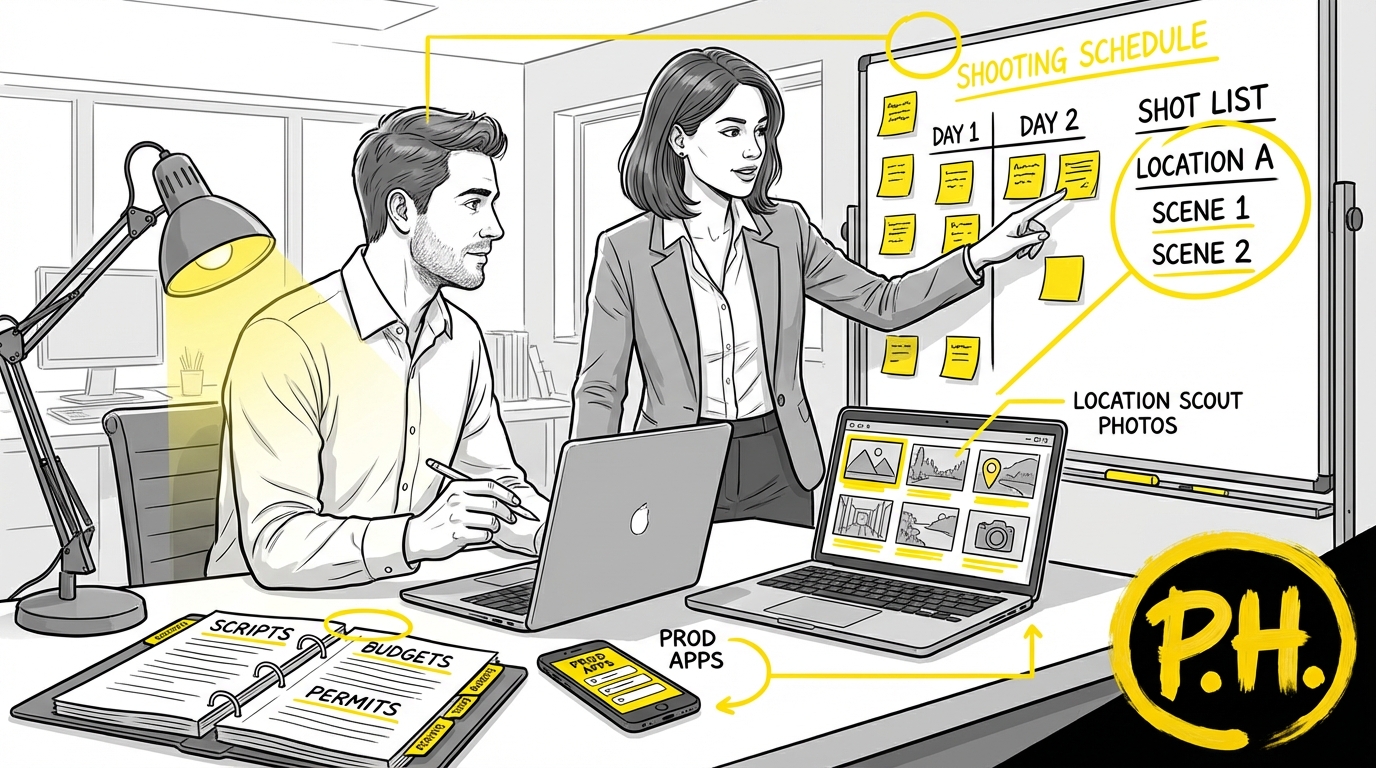
Short answer: To prevent problems you don’t want on shoot day.
Pre-production questions about:
- Locations
- Power
- Access
- Client expectations
aren’t overkill—they’re risk management.
What experienced crew know:
Every unanswered question becomes a delay, workaround, or compromise later. Asking early protects the schedule and the budget.
Question 9: “Can We Figure This Out on the Day of the Shoot?”
Short answer: You can—but you’ll pay for it.
Improvisation has its place. But relying on it for:
- Gear decisions
- Crew roles
- Location logistics
almost always costs more in time, stress, or money.
What working pros advise:
The more clarity you bring into a shoot, the more flexible you can be during it.
Question 10: “Where Should Producers Go to Ask These Questions?”
Short answer: Where working professionals actually answer them.
Most production knowledge isn’t written in textbooks. It lives in conversations, experience, and shared problem-solving.
That’s where community-driven resources matter.
Platforms like ProductionHelp.io exist to:
- Surface real-world production questions
- Connect producers with crew and vendors by city
- Share practical answers from people who work on set—not just theory
When questions are asked early and answered honestly, productions run better for everyone involved.
Final Takeaway: Real Answers Come From Real Experience
Budgets, gear, and rates aren’t mysterious once you understand the why behind them. Most production problems aren’t caused by lack of talent—they’re caused by unclear expectations and missing context.
Listening to working crew:
- Improves planning
- Reduces friction
- Leads to better outcomes on set
If you’re a producer, client, or filmmaker trying to make smarter decisions, seek out places where real production conversations happen—not just polished summaries.
That’s how you move from guessing to producing with confidence.