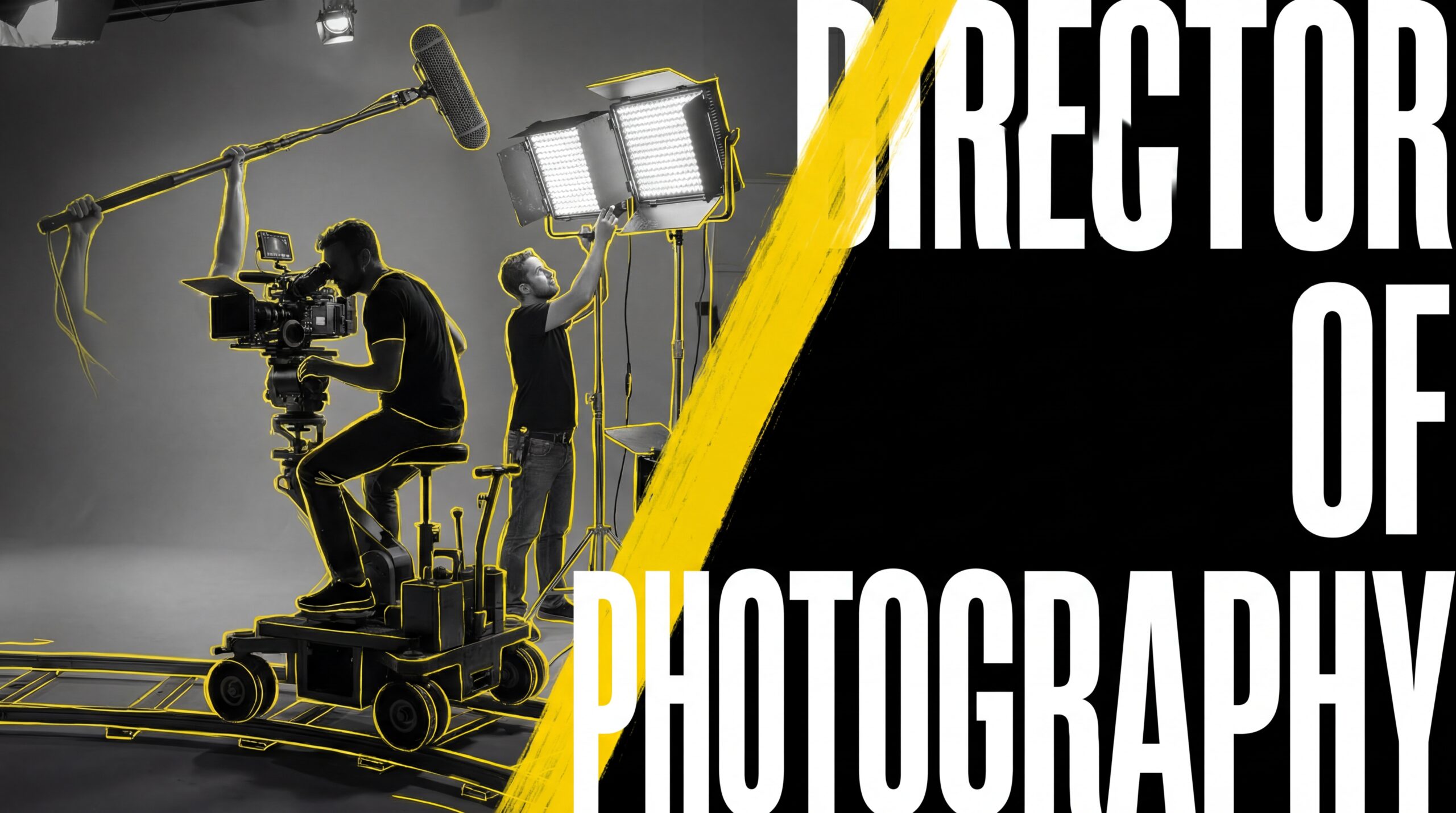
Every film set has a hierarchy, and near the top of that hierarchy sits a role that most clients have heard of but few truly understand. The director of photography — also called the DP or cinematographer — is the person responsible for translating a director’s vision into images. They make decisions about light, camera movement, lens choice, color, and composition that define the look and feel of everything you see on screen.
If you’re producing a corporate video, a documentary, a commercial, or any type of professional video content, hiring the right DP can make or break the project. But to hire the right one, you first need to understand what the job actually involves — and why it commands the rates it does.
This guide breaks down the director of photography role in full — what they do before, during, and after production, how they collaborate with the rest of the crew, what they charge, and how to evaluate whether someone is actually qualified for the title.
The Core Responsibility: Visual Storytelling
The director of photography is the chief visual artist on a production. While the director focuses on performance and narrative, the DP focuses on how every shot looks. Every frame you see in a professional film or video was deliberately composed and lit by — or under the direct supervision of — the DP.
This includes decisions like:
- Where to place the camera and at what height and angle
- What focal length lens to use for each shot
- How to light the subject, the background, and the environment
- What camera movement (static, handheld, dolly, gimbal, crane) best serves the scene
- How the color palette and contrast should feel throughout the piece
These choices aren’t arbitrary — they’re emotional and strategic. A low-angle shot makes a subject feel powerful. Warm backlighting creates intimacy. A slow dolly forward signals tension. The DP has a visual language, and they use it fluently on every shoot.
This is what separates professional video from amateur footage — not the camera body, but the operator’s intentional decisions about how the world appears through the lens. Two people with identical cameras can produce vastly different results depending on their understanding of light, space, and visual design. The DP’s job is to ensure every frame serves the story.
Pre-Production: What the DP Does Before Cameras Roll
A skilled director of photography doesn’t just show up on set and start shooting. The work begins in pre-production, often weeks before the shoot day. During this phase, the DP collaborates closely with the director to develop the visual concept of the project.
This typically includes:
- Concept meetings: Reviewing the script or brief and discussing tone, style, and visual references
- Location scouts: Visiting locations to assess lighting conditions, spatial constraints, and logistical challenges
- Camera and lens testing: Selecting the right camera body and lens package for the project’s aesthetic
- Shot listing and storyboarding: Sometimes working with the director to plan camera setups in detail
- Crew hiring: The DP often recommends or directly hires their camera department (camera operator, 1st and 2nd AC, DIT)
- Lighting plan: Working with the gaffer to develop a lighting strategy for each location
On larger productions, this pre-production work can span weeks. On smaller projects, it may be compressed into a single prep call. Either way, it’s baked into the DP’s rate.
On Set: Leading the Camera Department
On the day of the shoot, the DP is both a creative decision-maker and a department head. They are responsible for everything related to camera and lighting — which means they’re managing people, gear, and time simultaneously.
A typical on-set day for a director of photography looks like this:
Early call: The DP arrives with the gaffer and key grip to begin the lighting setup before talent arrives. Depending on complexity, this can take 30 minutes or several hours.
Technical setup: Camera builds, lens mounts, monitors, wireless video feeds, and other technical elements are confirmed by the 1st AC and DIT. The DP checks the image on the monitor and approves the frame.
Shooting: The DP either operates the camera themselves (common on smaller productions) or works alongside a dedicated camera operator. They communicate with the gaffer, key grip, and director in real time to adjust light and composition as shots develop.
Adapting on the fly: Weather changes, talent blocking adjustments, unexpected location issues — the DP solves visual problems continuously throughout the day.
Throughout all of this, the DP is also keeping an eye on time. Shooting schedules are tight, and a DP who can deliver quality images efficiently — without burning through unnecessary setups or lighting changes — is worth their rate many times over. Experienced DPs know how to balance artistic ambition with production reality. They make good decisions fast because they’ve encountered the same problems hundreds of times before.
Lighting: The DP’s Most Powerful Tool
If you ask most DPs what defines their craft, they’ll say lighting before anything else. The way a subject is lit determines nearly everything about how it feels — their perceived age, mood, authority, warmth, and even credibility.
A director of photography approaches lighting as sculpture. Light and shadow create dimension and depth that a flat, evenly-lit image simply cannot achieve. This is why corporate videos shot by experienced DPs look so dramatically different from footage shot on a phone or by an inexperienced crew.
There are fundamentally different lighting philosophies that DPs use:
- High-key lighting: Bright and even, minimal shadows — common in commercial and corporate work
- Low-key lighting: High contrast, dramatic shadows — used in narrative, documentary, and stylized branded content
- Natural/available light: Working with existing light rather than adding artificial sources — requires deep knowledge of window exposure and reflectors
- Mixed source: Combining daylight, practical lights, and artificial sources — the most complex and most common approach on professional shoots
The DP collaborates with the gaffer (chief lighting technician) to execute the lighting plan. The gaffer runs the electrical department; the DP provides the creative direction for every light placement and intensity.
Camera Operation: DP vs. Camera Operator
One source of confusion when hiring is whether the DP will also operate the camera or whether you need a separate camera operator. The answer depends on the production scale and budget.
On smaller productions — corporate videos, event coverage, interviews, branded content — the DP typically operates the camera themselves. This is standard and keeps your crew lean. The DP handles composition, focus pulling on simpler setups, and camera movement.
On larger productions — broadcast, feature films, multi-camera shoots — the DP steps back from the camera and works alongside a dedicated camera operator (or multiple operators). This allows the DP to focus on the bigger picture: light, monitor, and overall visual consistency across the day.
When you’re looking to hire a camera operator, know that the camera operator executes the DP’s vision — they don’t make the same level of creative decisions. A strong DP-operator relationship is collaborative and fast, but the DP remains the creative authority.
Post-Production: Color and the DP’s Lasting Influence
The DP’s involvement often extends beyond the shoot. In post-production, many DPs either perform the color grade themselves or work closely with a colorist to ensure the final image matches their original vision.
Color grading is the process of adjusting the tone, saturation, contrast, and color temperature of footage to achieve a specific look. A DP who shoots in Log (a flat, wide dynamic range format) and then grades their footage intentionally can deliver a cinematic result that’s impossible to replicate by shooting in a more compressed format.
Some DPs provide a “show LUT” (Look Up Table) to colorists that establishes the intended color palette. Others supervise the color session directly. Either way, the DP’s creative fingerprint typically carries through to the finished piece.
This is especially important on branded content where visual consistency across multiple deliverables matters. A experienced production crew will ensure the DP’s color notes travel from set into the edit.
What a Director of Photography Gets Paid
DP day rates vary significantly based on market, experience, project type, and union status. Here’s a realistic breakdown for 2026:
- Entry-level / emerging DP: $500–$800/day — newer to the role, strong technical skills but limited creative portfolio
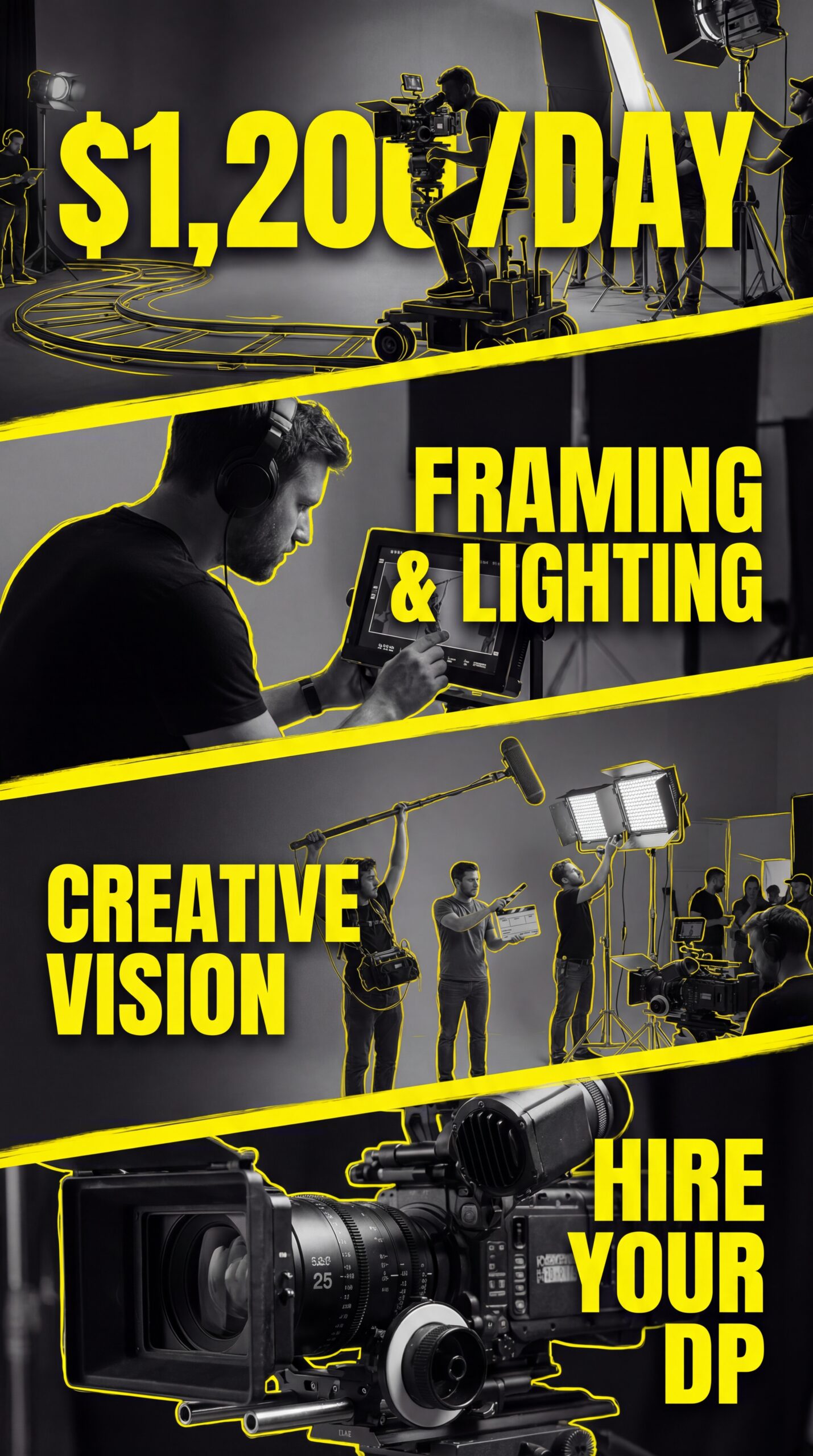
- Mid-level DP: $800–$1,500/day — solid reel, comfortable leading a crew, trusted on corporate and branded content
- Senior / established DP: $1,500–$3,000/day — proven track record, high-profile reel, often in demand by name
- Union DP (IATSE Local 600): $1,800–$3,500+ depending on category and project scale
These rates typically cover the DP’s labor only — camera equipment, lighting packages, and crew are priced separately. On many productions, the DP brings their own camera kit (at an additional equipment rental rate), which is common with owner-operators.
When budgeting for video production, understand that the DP rate is one of the most significant line items — and one of the most worth investing in. The visual quality of your content lives and dies with this hire. If you’re planning a larger production, working with a full production crew and getting competitive quotes through a platform like ProductionHelp.io helps ensure you’re getting the right person at the right rate for your market.
Keep in mind that day rates don’t always tell the whole story. A DP charging $800/day who requires three additional prep days, a large lighting package, and a full camera department may end up costing more than a senior DP at $1,800/day who works lean and delivers in a single day. Always evaluate the total package — not just the day rate headline number.
How to Find and Hire the Right DP
Hiring a director of photography starts with the reel. Before any conversation about rates or availability, watch their work. Look for lighting quality, composition, camera movement, and whether their aesthetic matches what you’re trying to create. A DP with a beautiful documentary reel may not be the right choice for a sleek product commercial — and vice versa.
Key questions to ask when interviewing a DP:
- What camera systems are you most experienced with?
- Do you bring your own kit, or do you work with rental houses?
- Can you recommend a gaffer and grip you’ve worked with before?
- How do you approach lighting for [your specific project type]?
- What’s your process for color delivery in post?
- Have you shot in [your location/environment] before?
A confident DP will answer these questions with specificity. They’ll talk about their gear with authority, reference past projects that align with yours, and ask sharp questions about your production goals. If they can’t articulate their visual approach, that’s a red flag — regardless of how good their reel looks.
Pay attention to how they talk about collaboration, too. The best DPs lead their crew with confidence but remain open to the director’s vision. They understand they’re in service of a story or a brand — not a personal portfolio exercise. Ego-driven DPs who ignore client direction or fight every creative note are a production liability, no matter how talented they are technically.
For productions that need to move fast, ProductionHelp.io maintains a vetted network of directors of photography across the country, with rates, availability, and reels in one place. Whether you’re staffing a single-day shoot in Chicago or a multi-day branded content series in Los Angeles, finding the right DP shouldn’t slow down your production timeline.
The director of photography is the visual architect of your project. Invest in the right one, and everything else on screen rises to meet them.