
What It Actually Costs to Hire a Camera Operator (And Why Rates Vary So Much)
Hiring a camera operator sounds simple—until you start asking for quotes.
One person tells you it’s $400 a day. Another quotes $1,200. Someone else says “$75 an hour, gear not included.” Suddenly, you’re wondering if you’re being overcharged, under-budgeting, or missing something important.
The truth is: camera operator rates vary for good reasons. Understanding what drives those costs will help you budget accurately, avoid surprises, and hire the right operator for your project—not just the cheapest one.
This guide breaks down what camera operators actually charge, why rates differ so much, and how to think about cost in a way that reflects real-world production.
Day Rates vs Hourly Rates: What’s the Difference?
Most professional camera operators work on day rates, not hourly rates. A “day” typically means 8–10 hours, depending on the market and the project.
Day Rates (Most Common)
- Usually range from $500 to $1,200+ per day
- Designed for full production days
- Often preferred by experienced operators
- Easier to budget for multi-hour shoots
Day rates exist because production work rarely fits neatly into hourly blocks. Setup, breakdown, waiting on talent, lighting adjustments, and resets are all part of the day.
Hourly Rates (More Limited Use)
- Common for short corporate shoots, interviews, or internal videos
- Typically range from $60 to $125 per hour
- Often include minimums (e.g., 4-hour minimum)
Hourly rates can work for very small projects, but once a shoot goes beyond a few hours, day rates are usually more realistic—and often more cost-effective.
Operator-Only vs Operator With Gear
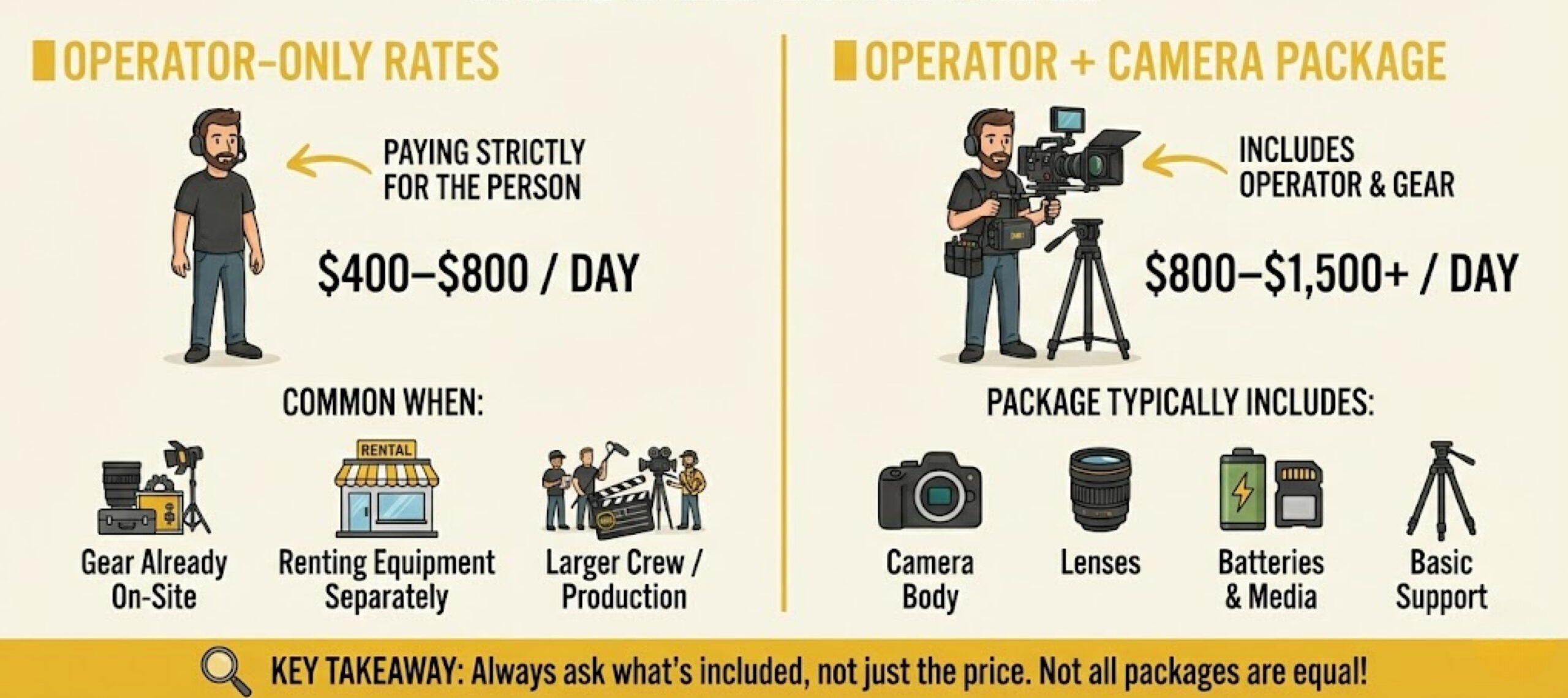
One of the biggest reasons camera operator pricing varies is whether gear is included.
Operator-Only Rates
This means you’re paying strictly for the person—not the equipment.
- Common when:
- You already have gear on-site
- You’re renting equipment separately
- You’re working with a larger crew or production company
- You already have gear on-site
- Typical range: $400–$800/day, depending on experience and city
Operator-only rates are common on commercials, television shoots, and larger productions where gear is handled separately.
Operator + Camera Package
This includes the operator’s own camera, lenses, and often basic accessories.
- Typical range: $800–$1,500+ per day
- Package may include:
- Camera body
- Lenses
- Batteries & media
- Basic support (tripod, monopod)
Not all camera packages are equal. A mirrorless kit for corporate interviews is very different from a cinema camera package built for broadcast or commercial work.
Always ask what’s included, not just the price.
Why Location Matters So Much
Where a camera operator is based has a major impact on pricing, and it goes far beyond simple geography. In large production hubs like Los Angeles, New York, or Atlanta, rates are typically higher because the cost of living is higher, demand is constant, and operators are accustomed to working on fast-paced, high-stakes productions. These markets also tend to have stronger union presence and more specialized roles, which naturally raises the baseline for professional day rates.
In mid-size or smaller markets, rates are often lower, but availability can be more limited. A skilled operator in a regional city may still deliver excellent work, but travel time, gear transport, or limited local crew depth can influence pricing. Location affects not just what an operator charges, but how they structure their day, what’s included in their rate, and how flexible they can be if plans change. Understanding local norms helps you budget accurately and avoid misaligned expectations.
Experience Level Makes a Real Difference
Camera operator pricing is closely tied to experience, but not just in terms of years behind the camera. Less experienced operators may offer lower rates and can be a good fit for straightforward shoots with clear direction and minimal technical complexity. However, they may require more guidance, take longer to set up, or struggle when unexpected issues arise on set.
More experienced operators bring something harder to quantify: decision-making under pressure. They know how to adapt to lighting challenges, shifting schedules, difficult locations, and client expectations without slowing down production. Their higher rates reflect not just technical skill, but reliability, efficiency, and the ability to protect the shoot when things don’t go perfectly—which, in real productions, happens often.
Project Type Impacts Pricing More Than People Expect
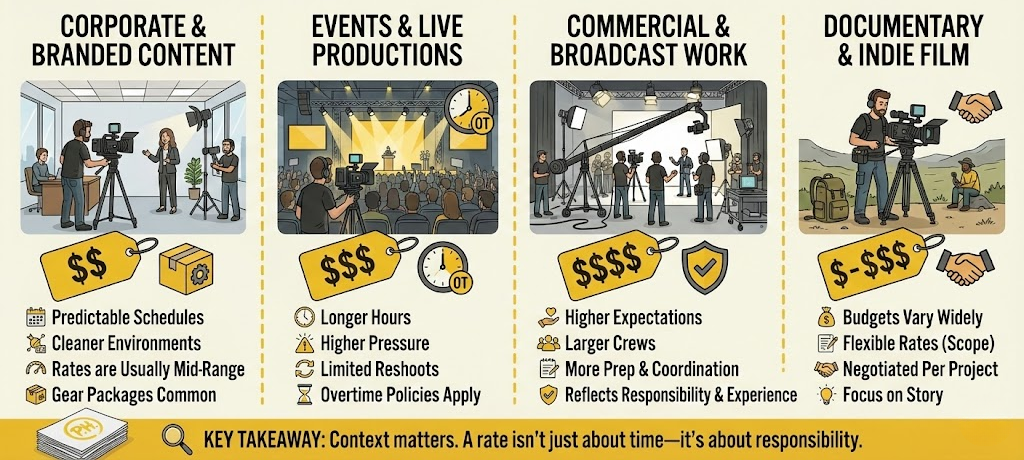
The same operator may charge different rates depending on the project.
Corporate & Branded Content
- Often predictable schedules
- Cleaner environments
- Rates are usually mid-range
- Gear packages are common
Events & Live Productions
- Longer hours
- Higher pressure
- Limited chances for reshoots
- Overtime policies often apply
Commercial & Broadcast Work
- Higher expectations
- Larger crews
- More prep and coordination
- Rates reflect responsibility and experience
Documentary & Indie Film
- Budgets vary widely
- Rates may be flexible depending on scope
- Often negotiated per project
Context matters. A rate isn’t just about time—it’s about responsibility.
Why “Cheap” Often Costs More Later
Choosing the lowest rate can seem like a smart budget move, but it often introduces hidden risks. Lower pricing may reflect limited experience, incomplete gear, or lack of preparation for real-world production challenges. When issues arise—missed shots, technical problems, or inefficient workflows—the cost usually appears later in the form of reshoots, extended editing time, or compromised quality.
Experienced operators anticipate problems before they happen. They know how to work efficiently, adapt quickly, and deliver usable footage even under less-than-ideal conditions. While their rates may be higher upfront, they often save money by preventing delays and protecting the overall production.
How to Budget Smarter for Camera Operators
Instead of asking, “What’s the cheapest rate?” ask:
- What level of experience does this project require?
- Do we need gear included or operator-only?
- How long is the shoot day realistically?
- Is there overtime?
- What happens if the schedule changes?
Clear expectations lead to accurate quotes—and smoother production days.
Final Thoughts
Camera operator rates vary because productions vary.
City, experience, gear, project type, and expectations all play a role. Understanding these factors helps you budget realistically, hire smarter, and avoid costly surprises later.
If you’re planning a shoot and want to understand local rates or find operators by city, ProductionHelp.io can help you explore crew options and get grounded answers from people who actually work in production.
The goal isn’t to pay the least—it’s to pay appropriately for the shoot you’re trying to make.