
The drone shot in a corporate video often runs only a few seconds on screen. It is the slow push over the headquarters roof at sunrise, or the reveal of a stadium before the event cut starts. Getting those few seconds can take a site check, an airspace authorization, a conversation with building security, and a backup plan for wind. That is the work you are paying for when you book aerial DP services.
This guide is for producers, marketing teams, and anyone hiring a drone crew for the first time. It covers what an aerial DP does, how that differs from a drone pilot who also shoots, what to confirm before you book, and how to fit aerial work into a shoot day.
What an aerial DP does
An aerial director of photography is responsible for how the footage from the air looks. That means framing, camera movement, exposure, lens choice, and matching the aerial shots to the look of everything shot on the ground. The ground-based version of the job is covered in our guide on what a director of photography does. The aerial DP applies the same thinking to a camera that is moving through the air.
On many corporate and real estate shoots, one person handles all of it. They fly the drone, operate the camera, and deliver the files. On larger productions the job splits in two:
- Pilot. Flies the aircraft, watches airspace, battery levels, and obstacles, and makes the call to land.
- Camera operator. Controls the gimbal and camera on a separate controller and focuses only on the shot.
Some higher-end drones support this two-operator setup. It costs more because you are paying for two people, but the pilot can fly a precise line while the operator holds the frame, which is hard to do well alone on a complex move.
Neither setup is right for every job. A real estate exterior with a few orbits and a top-down shot rarely needs two people. A car tracking shot along a road usually does.
What aerial DP services usually include
Every vendor packages this differently, so ask for a written list. Common pieces include:
- A site and airspace check before the shoot day
- Airspace authorization, when the location is in controlled airspace
- The flight crew, aircraft, spare batteries, and spare propellers
- Shooting in a format and frame rate that matches your ground cameras
- Raw files, a selects reel, or edited aerial clips
- Liability insurance, with a certificate if your location asks for one
Some drone teams also offer photography, mapping, or inspection work. Those are different skills. If you need cinematic movement for a brand film, look at their video reel, not their roof inspection portfolio.
The FAA basics to confirm before you book
In the United States, commercial drone work falls under the FAA’s Part 107 rules. You do not need to become an expert, but you should confirm a few things with any drone DP you hire:
- Remote pilot certificate. The person at the controls needs an FAA remote pilot certificate, or has to be directly supervised by someone who holds one. Ask for it. A working pilot should have it ready to send.
- Current training. The FAA requires remote pilots to have completed recurrent training within the previous 24 calendar months.
- Registered aircraft. Drones flown under Part 107 must be registered with the FAA and marked with their registration number, and registered drones must comply with Remote ID.
- Airspace. Flying in controlled airspace near many airports needs authorization, often through the FAA’s LAANC system. Many requests are approved in near real time. Requests that need further coordination with air traffic control must be submitted at least 72 hours ahead.
- Altitude and night work. The normal ceiling is 400 feet above the ground. Night flying is allowed under the current rules when the pilot has current training and the drone has anti-collision lighting, so ask if your shot list includes dusk or night.
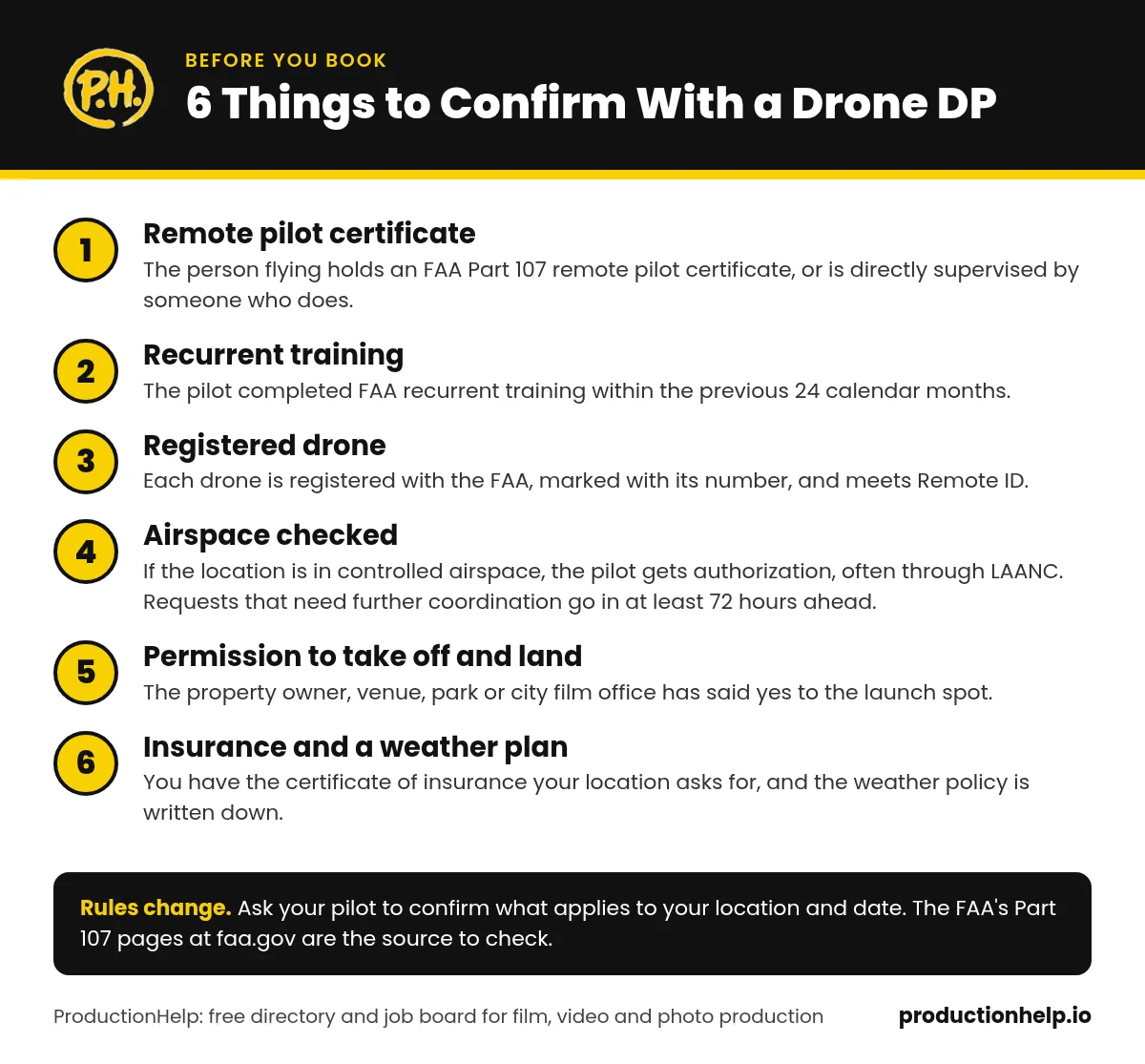
Rules change, so ask your pilot to confirm what applies to your specific location and date. The FAA’s own pages on Part 107 are the source to check.
Federal rules are only one layer. Cities, parks, venues, and private property owners can have their own rules about where a drone can take off and land. National Park Service units generally prohibit launching or landing a drone on park land and water unless the superintendent approves it in writing. A city film office may want the drone listed on your film permit. When you scout the location, add the launch spot to your list of questions for the property manager.
Questions to ask a drone DP
A reel shows how someone shoots on a good day. These questions show how they handle the other days:
- Can you send your remote pilot certificate and your insurance certificate?
- Have you checked the airspace at our location, and do we need an authorization?
- What is your wind and weather limit, and who makes the call to stand down?
- Is this a one-person or two-person setup, and why?
- How many batteries do you bring, and how long does each flight last on that aircraft?
- What format, frame rate, and color profile will you shoot so the footage cuts with our ground cameras?
- What do we get at the end of the shoot, and how fast?
- What happens to the day rate if weather grounds the flight?
Ask the last one before you sign anything. Wind or rain can ground a drone on the day, and a weather policy written into the scope of work saves an awkward conversation later.
How to plan aerial shots into the shoot day
Give aerial shots their own setups on the schedule. Trying to grab them between interviews rarely goes well.
Put them on the shot list. Describe each move: where it starts, where it ends, how long it should run, and what it needs to reveal. Our guide on building a shot list shows a format that works for this.
Schedule around light and people. Early morning often means softer light, calmer air, and fewer people in the frame. Part 107 limits flying over people who are not part of the operation, so a busy plaza at noon may rule out the shot you want.
Put the drone team on the call sheet. List their call time, the launch spot, who on the location team they check in with, and a backup time slot.
Tell security and neighbors. A drone over a corporate campus tends to get the attention of building security. A heads-up to the facilities team before the first flight avoids a stopped take.
Check insurance early. Some venues and permit offices ask for a certificate of insurance before the shoot. Find out what your location needs and confirm the drone vendor’s coverage meets it.
Where to find aerial DP services
Start local when you can. A drone DP who already flies in your city knows the airspace around the local airports, which rooftops and parks allow takeoffs, and which spots get windy in the afternoon. It also saves you travel days.
The ProductionHelp drone and aerial DP directory lists drone pilots and aerial camera teams with profiles and work samples, so you can compare reels before you reach out. If you are shooting in Florida, we also have city pages for drone operators in Tampa and drone operators in Jacksonville.
Not sure which vendor fits the job? Post your job for free with the location, date, and the shots you need, and let drone teams come to you.
Aerial DP services FAQ
What is an aerial DP?
An aerial director of photography plans and shoots the footage from the air. They handle framing, camera movement and exposure so the aerial shots match the footage shot on the ground. On smaller jobs the same person also flies the drone. On larger jobs a separate pilot flies while the aerial DP runs the camera.
Does a drone DP need an FAA license?
For commercial drone work in the United States, the person at the controls needs an FAA remote pilot certificate under Part 107, or has to be directly supervised by someone who holds one. The pilot also needs to have completed FAA recurrent training within the previous 24 calendar months. Ask to see the certificate before you book.
How far ahead should I book a drone shoot near an airport?
Bring the drone team in before you lock the date. Many LAANC requests in controlled airspace are approved in near real time, but requests that need further coordination must be submitted at least 72 hours before the flight. Requests filed through FAADroneZone can take much longer, so a shoot near an airport needs early planning.
Can a drone fly at night for a video shoot?
Yes. Under Part 107, night flights are allowed without a waiver when the remote pilot has current training and the drone has anti-collision lighting visible for at least three statute miles. Flights in controlled airspace still need an airspace authorization, day or night.
Where can I find aerial DP services near me?
Search the ProductionHelp drone and aerial DP directory by city to compare profiles and work samples, then contact drone teams directly. You can also post your job for free with the location, date and shots you need.
Before you book
Send your drone DP three things: the exact address, your shot list with the aerial moves marked, and the date with a weather backup. Ask for their certificate and insurance in return. If either side cannot answer something on that list, settle it before the shoot day.