
Short answer: To hire a camera crew, write down the shoot first: what you are filming, the date, the city, and what you need delivered. Pick a crew size that fits that job. Then search local crew by city and role, compare reels that look like your project, and confirm the rate, gear, insurance and terms in writing with the crew before the shoot day.
Most people searching for a camera crew hire are not production people. They are marketing managers, event planners, agency producers and founders who need an interview, a conference or a product shoot covered, often in a city they have never worked in. This guide walks through what a camera crew actually includes, how many people a typical shoot needs, what moves the cost, and what to ask before you book.
The five steps to hire a camera crew
- Define the shoot. Type of video, date, city, start and end time, and the files you need at the end.
- Choose a crew size. One operator, a two-person team with audio, or a larger multi-camera crew. The table below helps.
- Search local crew. Look for camera operators who already work in the city, so you are not paying for travel days.
- Compare reels. Ask for work that looks like your project, not their best-looking music video.
- Confirm it in writing. Rate, hours, gear list, who shows up, insurance, overtime and cancellation terms.
What a camera crew includes
“Camera crew” means different things to different vendors. One person might quote you a camera crew and show up alone with a camera and a light kit. Another might send three people and a van. Ask for names and roles before you agree to anything. These are the roles you will see most often:
- Camera operator or videographer. Runs the camera, frames the shots and usually brings the camera package. On small jobs this person also sets the lights and the microphones.
- Audio or sound mixer. Records clean sound with lavalier and boom microphones and monitors it on headphones. For interviews, bad audio is the problem you cannot fix later.
- Gaffer or grip. Sets and shapes the lighting and rigs stands, flags and diffusion. On a one- or two-person crew, the operator often covers this.
- Crew chief or lead. On bigger jobs, one person runs the crew on site, keeps the schedule and is your single point of contact.
- Gear package. Cameras, lenses, lights, audio, media cards and sometimes a teleprompter or a monitor for the client. Ask whether gear is included in the day rate or billed on its own.
Which camera crew size fits your shoot
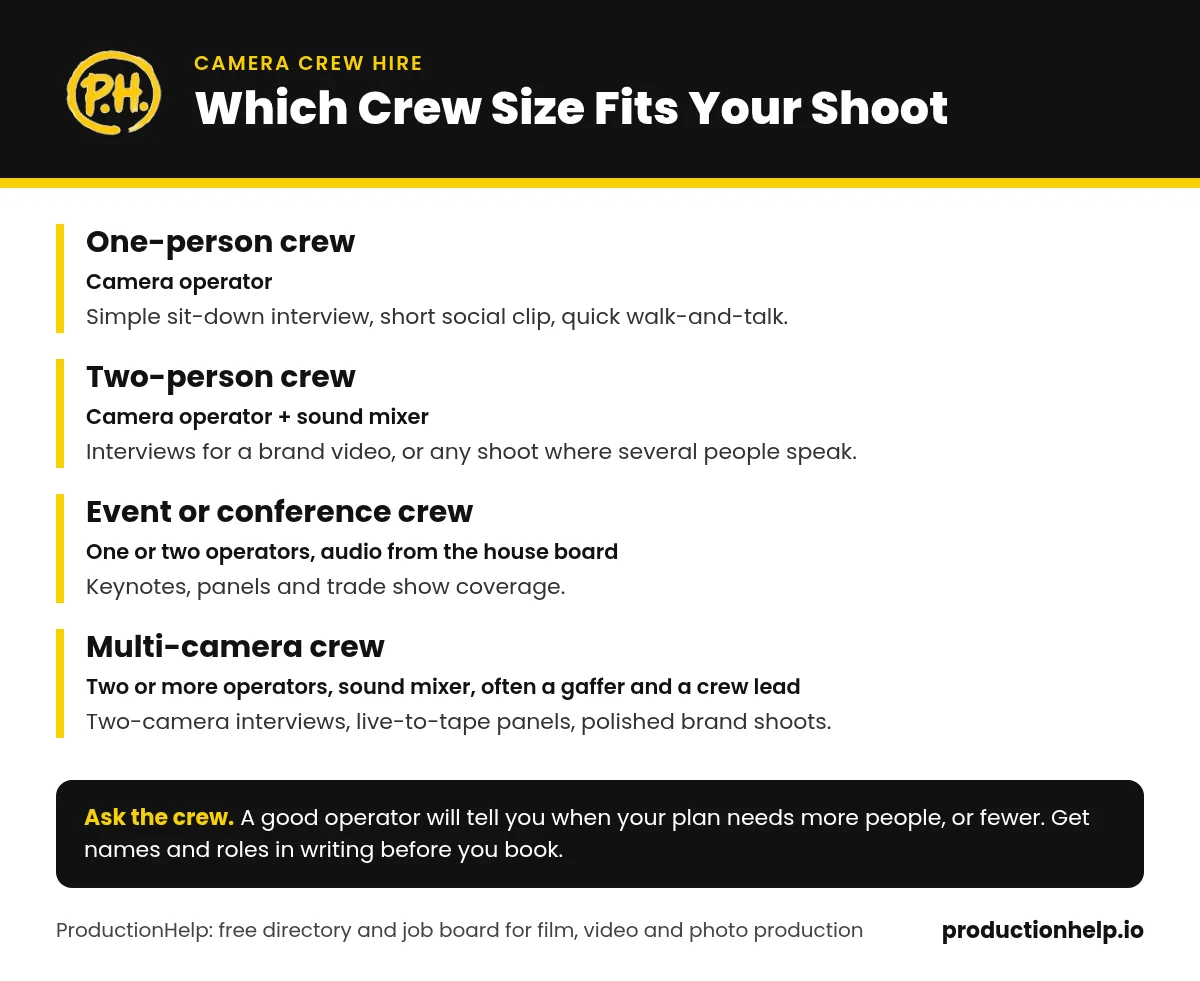
Use this as a starting point, then ask the crew what they would bring. A good operator will tell you when your plan needs more people, or fewer.
- One-person crew. One operator with a camera, a small light kit and wireless microphones. Fits a simple sit-down interview, a short social clip or a walk-and-talk where speed matters more than polish.
- Two-person crew (camera plus audio). The operator focuses on picture while a sound mixer handles microphones. Fits interviews you plan to use in a brand video and any shoot where several people speak.
- Event or conference crew. One or two operators following the agenda, sometimes with a separate person for audio from the house sound board. Fits keynotes, panels and trade show coverage.
- Multi-camera crew. Two or more cameras, an audio mixer, and often a gaffer and a crew lead. Fits a two-person interview shot from both sides, a live-to-tape panel or a polished brand shoot.
Camera crew or full-service production company?
A camera crew shows up, shoots and hands over the footage. You or your team handle the planning, the script, the editing and the final delivery. A production company takes on more of that work, from planning through the finished edit. If you already have an editor and a clear plan, a crew is often all you need. Our guide on camera crew vs full-service production company breaks the choice down in more detail.
What affects the cost of a camera crew
We are not going to quote a price here, because rates change by city, crew and job. These are the things that move the number:
- Day or half day. Many crews price by the day or half day, and shoots that run long often trigger overtime.
- Crew size. Each extra person adds a day rate.
- Gear. A basic interview kit and a cinema camera package with a full lighting setup are priced very differently.
- Travel. Hiring crew who already live in the city usually saves travel days, mileage and hotel nights.
- Turnaround. Same-day file delivery or on-site editing usually costs extra.
For a closer look at how crews structure their quotes, read how much a video production crew costs.
What to ask before you book a camera crew
- Can you send two or three samples that look like this project?
- Who exactly will be on site, and what does each person do?
- What gear is included, and what costs extra?
- How long is a day, and when does overtime start?
- Can you send a certificate of insurance if the venue asks for one?
- How and when do we get the footage, and in what format?
- What happens if we cancel or move the date?
Get the answers in an email or a short written agreement. That way both sides know the same plan on the shoot day.
Where to find a local camera crew
Start with crew who already work in the city you are filming in. They know the venues, the parking, the traffic and where to pick up a spare battery in a hurry. You can search the ProductionHelp camera operators and videographers directory by city, open profiles to see work samples, and contact crew directly. ProductionHelp is free to search, and you talk to the crew yourself. We are not part of the booking or the payment.
We also keep city guides with local listings and planning notes, for example hiring a camera crew in Tampa and hiring a camera crew in Austin. If you would rather have crew come to you, post your job for free with the city, date and what you need.
One note on how listings work: we approve every listing and job post to keep out spam. That approval is not a background, license or insurance check, so ask for the reel, the insurance certificate and references yourself before you book.
Camera crew hire FAQ
How do I hire a camera crew in another city?
Search for camera operators who already live and work in that city, so you do not pay for travel days. Compare reels that look like your project, then contact two or three crews with your date, location and shot needs. Confirm the rate, gear, crew names, insurance and cancellation terms in writing before the shoot.
What is included when you hire a camera crew?
It depends on the vendor, so ask for names and roles in writing. A camera crew can be one operator with a camera, lights and microphones, or a team with a camera operator, a sound mixer, a gaffer or grip and a crew lead. Ask whether the gear package is included in the day rate or billed separately.
How many people do I need on a camera crew for an interview?
A simple interview can work with one operator. If the interview will be used in a polished video or more than one person is speaking, a two-person crew with a dedicated sound mixer is a common choice. For two cameras on one interview, plan on at least two operators plus audio.
Should I hire a camera crew or a full-service production company?
Hire a camera crew if you already have a plan, a script or questions, and someone to edit the footage. Hire a full-service production company if you want one team to handle planning, shooting and the finished edit.
What should I ask a camera crew before booking?
Ask for samples like your project, who will be on site, what gear is included, how long a day is and when overtime starts, whether they can provide a certificate of insurance, how footage is delivered, and what happens if you cancel or move the date.
Where can I find local camera crews by city?
Search the ProductionHelp camera operators and videographers directory by city, open profiles to compare work samples, and contact crew directly. It is free to search and free to post a job, and ProductionHelp is not part of the booking or the payment.
Before you book
Send the crew three things: the address and call time, a short list of the shots or interviews you need, and how you want the files delivered. Ask for their gear list and insurance in return. If anything on either list is unclear, settle it by email before the shoot day.