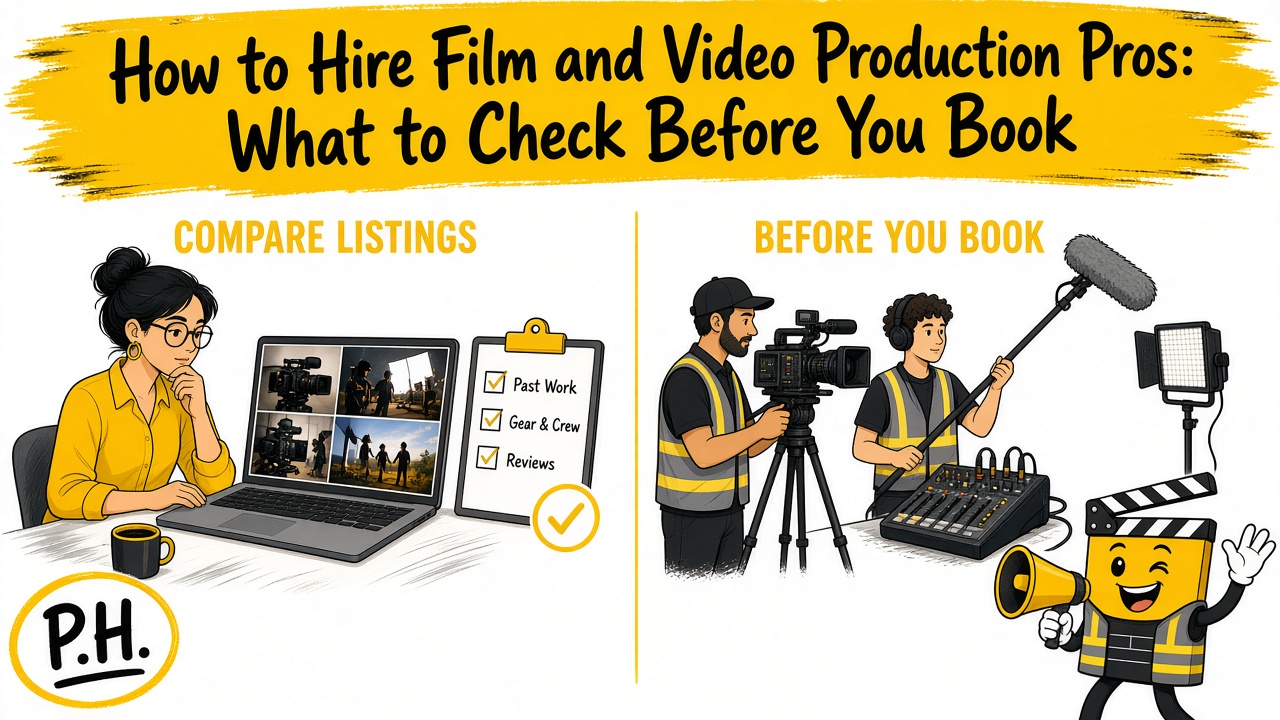
Hiring film and video production pros is easier when you know what to compare before you send a deposit. A strong listing should show more than a logo and a contact form. It should help you judge fit: past work, insurance, union status, gear, location, and whether the person or company is free on your dates.
This guide is a practical checklist for evaluating directory listings and shortlisting camera operators, gaffers, sound mixers, and full-service teams. If you need a broader overview of roles and where crews are often sourced, see our earlier guide on hiring the right crew for video producers. Planning coverage for a conference, launch, or gala? Use our event videography hiring guide for event-specific planning, then come back here for how to read a listing.
Who this guide is for
This article is for producers, marketing managers, agency producers, and small production teams who need to hire film crew or hire a videographer without guessing from a polished reel alone.
It is especially useful when you are:
- Booking a camera operator or camera crew for a short corporate or branded shoot
- Adding a gaffer or sound mixer to a day that already has a director of photography
- Comparing full-service video production companies against a la carte freelancers
- Hiring in a market you do not know well and need clear listing details before you call
You do not need a feature-film budget to use this process. You need a clear job description and a consistent way to compare candidates.
Decide the job before you hire
Most hiring problems start with a vague brief. “We need a videographer” can mean a single operator with a kit, a two-person camera and sound team, or a full production company with lighting and post. Decide the job first, then search listings that match it.
Write down:
- Deliverables. Rough cuts, final masters, raw footage, social cuts, or live capture only.
- Shoot days and call times. Include load-in, wrap, and any overnight needs.
- Locations. Studio, office, exterior, multi-city, or travel-heavy days.
- Audio expectations. Lavs, boom, plant mics, house feed, or interview setups.
- Lighting and grip needs. Available light, interview kits, or a fuller electric package.
- Special requirements. Drone, steadicam or gimbal, multicam, bilingual crew, or union preferences.
When those details are clear, you can hire production professionals with fewer scope surprises. Rates vary by role, market, and day count, so a precise scope also makes quotes easier to compare.
Core roles most hirers actually need
You will not need every department on every job. Most commercial, branded, and corporate shoots hire from a short list of roles. Use category pages to browse people who already work in that lane.
Camera operators and videographers. These listings cover operators who can run camera, often with their own kits. Start here when you need to hire camera operators and videographers for interviews, B-roll, product, or simple multi-camera days.
Gaffers. A gaffer leads the lighting and electrical plan and works with grips and the camera department. Browse gaffers when lighting quality, power, and setup time matter as much as the camera body.
Production sound mixers. Clean dialogue saves post. Look at production sound mixers when interviews, presentations, or location dialogue are central to the edit.
Full-service video production. Some projects are better as one coordinated package: producer, camera, sound, lighting, and delivery. Compare full-service video production companies when you want a single point of contact rather than assembling each role yourself.
Drone and aerial DP. Aerial shots need the right certifications, insurance, and experience for the location. Use the drone and aerial DP category when airspace, permits, or controlled sites are part of the plan.
For a wider browse across roles and markets, start in the ProductionHelp directory.
What to compare on a listing
Directory listings are useful when you treat them like a shortlist worksheet, not a popularity contest. Compare the same fields for every candidate.
Portfolio and recent work
Match the work to your job. A cinematic short does not prove interview lighting. A wedding highlight does not prove conference multicam. Look for similar environments, shot discipline, and audio quality. Prefer recent examples when formats and cameras change often.
Insurance
Ask what coverage they carry and whether certificates can be issued for your client or venue. Many locations will not allow a crew on site without proof of insurance. Confirm general liability at minimum, and ask about equipment coverage and any additional insured requirements.
Union status
Union status is not automatically better or worse. It is a fit question. Some productions require union crew. Others run non-union. Listings that state status clearly save time. If your client has a preference, filter for it early rather than discovering a mismatch after you negotiate rates.
Availability
A strong portfolio does not help if the person is booked. Confirm hold dates, option dates, and turnaround windows for call sheets and kit lists. For multi-day jobs, ask about consecutive-day availability and what happens if the schedule slides by a day.
Gear
Read the kit list against your shot plan. Camera body, lenses, media, lighting package, audio package, monitors, and backup media all matter. If the listing shows a lean kit, decide whether you will rent or whether another listing already includes what you need. Specialized tools (drone, gimbal, wireless video) should be explicit, not assumed.
Location and travel
Local crew often reduces travel fees, hotel costs, and early call complexity. If you are trying to find local film crew in a market you do not know, prioritize listings near the shoot city and ask about parking, load-in access, and preferred local vendors. For out-of-town hires, clarify travel days, per diems, and who books lodging.
Rates and what is included
Rates vary by role, market, and day count. Compare what the day rate includes: kit, assistants, overtime, mileage, media handling, and basic color or sound sync. A lower headline rate can cost more once kit and OT are added. Ask for an itemized quote against the same scope.
Questions to ask before you book
Use a short, consistent question set so answers are easy to compare.
- Which recent project is closest to this one, and what was your role?
- What insurance do you carry, and can you issue a certificate for our dates and location?
- Are you union or non-union for this type of job?
- Are you available for our hold dates, including load-in and wrap?
- What gear is included in your rate, and what would we need to rent?
- Who else do you typically bring (AC, boom op, grip), and how are those day rates structured?
- How do you handle backups for media and audio?
- What are overtime, cancellation, and weather-day terms?
- Who owns the footage, and what usage rights are included?
- What do you need from us before call (location notes, shot list, contacts, parking)?
Save the answers next to each listing. Patterns show up quickly: clear communicators, incomplete kit lists, or vague insurance replies.
Local hire vs unfamiliar market
Hiring locally is usually simpler when the shoot city has the roles you need. Local operators know common venues, rental houses, and commute realities. That can shorten prep and reduce travel line items.
Hiring in an unfamiliar market is still workable if you slow down on verification. Lean harder on portfolio match, insurance paperwork, references, and a planning call. Confirm whether the listing is based in that city or willing to travel in. Ask who handles local permits, drone rules, and preferred crew if you need a second camera or boom on short notice.
Either way, define the job in writing before you compare people. The listing checklist stays the same. Only the risk profile changes.
How ProductionHelp fits the workflow
ProductionHelp is built as a directory for finding and comparing production professionals. The workflow is straightforward:
- Decide the role and scope.
- Browse the directory or a category archive.
- Compare portfolio, insurance notes, union status, gear, location, and availability signals on each listing.
- Shortlist a few options and ask the questions above.
- Book the fit that matches the job, not only the most polished reel.
If you already know you need camera, lighting, sound, a full-service team, or aerial support, jump straight into those category archives linked earlier. If something is unclear about a listing or your hire path, contact us.
Common hiring mistakes
Hiring from a reel alone. Reels sell taste. They do not always prove reliability, insurance readiness, or kit completeness.
Skipping insurance and paperwork. Venue and client requirements can stop a shoot at load-in. Confirm certificates early.
Under-scoping audio. Quiet rooms still need a plan. Interviews and presentations fail when sound is an afterthought.
Assuming “videographer” includes lighting and sound. Clarify whether you are hiring one operator or a small crew.
Comparing quotes with different scopes. Align shoot hours, kit, deliverables, and OT rules before you decide on price.
Waiting too long to hold dates. Strong local crew books out. Holds protect the calendar while you finalize paperwork.
Ignoring location logistics. Parking, freight elevators, power, and neighbor noise affect real call times as much as the camera package.
Next step
Ready to shortlist? Browse the directory, open the category that matches your role, and compare listings with the checklist above. Prefer to talk through a hire? Contact ProductionHelp. For event-specific coverage planning, keep the event videography guide handy alongside this listing checklist.