
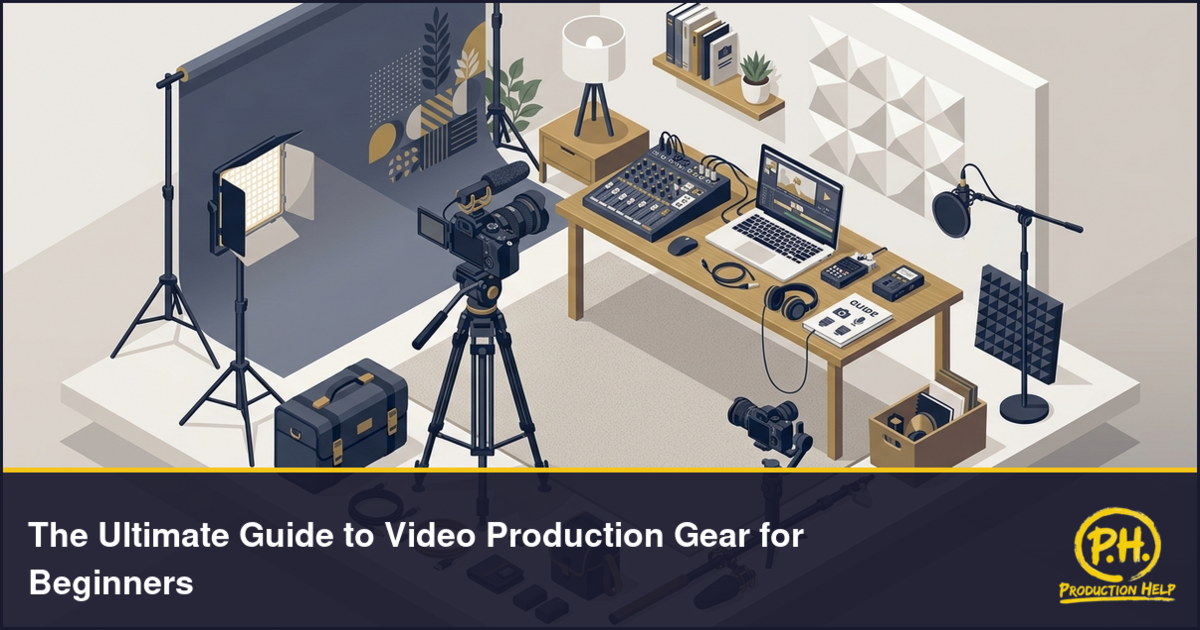
COMPREHENSIVE BEGINNER’S GUIDE TO VIDEO PRODUCTION EQUIPMENT
Video production equipment can be the make-or-break factor when it comes to the quality of your shoot. Whether you’re a novice or a seasoned professional, having the right tools is critical. From your first gear purchase to achieving professional-grade results, smart investments can potentially lead to substantial rewards. When appropriately utilized, the right tools can improve your final video output and expedite your production process, allowing for both creativity and speed.
ESSENTIAL CAMERAS FOR BEGINNERS: WHAT YOU NEED TO KNOW
The first step in choosing your video production equipment is the camera selection process. Understand your shooting goals, and craft a budget accordingly. The most common camera types are DSLRs, mirrorless cameras, camcorders, and smartphones. Both DSLRs and mirrorless cameras ensure high-end image quality and offer interchangeable lenses for greater creative control.
Mirrorless cameras are usually lightweight with swift autofocus, making them suitable for run-and-gun shooting. Camcorders, on the other hand, are less complicated, often cheaper, and designed mainly for video shooting. They are an excellent option for beginners who want to concentrate more on straightforward shooting.
Include smartphones into your consideration; they can deliver remarkable results with the right apps and additions like stabilizers or lenses. The camera selection mainly depends on what kind of shoot you are involved in, how much you can afford to spend, and the time you are willing to spend to master camera controls and settings. Cameras with easy-to-use controls and excellent video resolution, such as 1080p or 4K, should be prioritized to future-proof your efforts.
THE LENS FACTOR: SHAPING YOUR FILMMAKING STYLE
Understanding the impact of lenses on your video is essential as a beginner. The difference between prime and zoom lenses is one key consideration. While prime lenses offer sharper images and impressive low-light performance due to their fixed focal length, zoom lenses’ flexibility allows you to cover a range of focal lengths without the need for lens changes.
The effect of focal length on the framing and depth of the field can be significant. A wide lens will allow you to capture a larger scene, while a telephoto lens will help to isolate subjects with blurred backgrounds. For most beginners, the versatility of a 24-70mm zoom lens proves to be useful for various types of shoots. Focal ranges that cover wide and medium perspectives can help you explore different storytelling styles without adding additional pressure to your equipment budget.
FIVE MUST-HAVE ACCESSORIES FOR NOVICE VIDEO PRODUCTION
1. Tripod: These tools aid in stabilizing your camera resulting in professional-looking, steady shots.
2. External Microphone: Quality audio is key. Therefore, invest in a good external mic to enhance audio clarity.
3. Lighting Kit: The use of affordable kits with softboxes or LED panels enhances lighting consistency, particularly indoors.
4. Memory Cards: High-speed, reliable cards will prevent any data loss and allow for recording in higher resolutions.
5. Camera Stabilizer or Gimbal: These accessories deliver smooth movement shots without camera jitter, valuable for dynamic footage.
Each of these accessories can significantly improve your video production quality without requiring a substantial initial investment.
ILLUMINATE YOUR SHOOT: THE IMPACT OF OPTIMAL LIGHTING
The importance of lighting in giving your footage a professional edge cannot be overemphasized. Beginners can master this without the use of complex lighting setups by understanding the essentials of three-point lighting: key light, fill light, and backlight.
Furthermore, affordable tools like softboxes and LED panels—lightweight and energy-efficient—can help diffuse and adjust lighting. One of the best light sources, natural light, can deliver flattering illumination when shooting near windows or outdoors during the golden hour. Utilize reflectors to bounce light and reduce shadows. Simplicity is important at the initial stages. Concentrate on achieving consistent, soft light that enhances the subject and its surroundings.
ACHIEVE CRYSTAL CLEAR SOUND WITH BASIC AUDIO GEAR
Bad sound quality can quickly disengage an audience. To maintain quality audio, beginners should explore types of microphones such as lavalier mics, shotgun microphones, and handheld options. Lavalier mics are minimalistic and ideal for capturing dialogue during interviews. Shotgun mics are great for minimizing background noise while capturing directional sound.
Handheld mics are your go-to when it comes to covering events and conducting interviews. Devices that can be easily connected to your camera or smartphone are usually top priorities, and using windshields or foam covers can be beneficial when shooting outdoors. Monitoring audio levels during recording ensures mistakes are prevented, making post-production workflow smoother.
ALL ABOUT BACKUPS: STORAGE, BATTERIES, AND SUPPORTING TOOLS
Given how quickly cameras and accessories can drain power, having spare batteries on hand prevents any shooting interruptions. External hard drives or SSDs can safeguard your footage on-site, freeing up your camera memory. Reliable card readers that are compatible with your memory cards should also be considered, as they can speed up file transfers.
Last but not least, a good camera bag can protect and help organize cables, lenses, and accessories for easy transport. These form crucial secondary tools that uphold efficiency during shoots.