

Quick answer: A C-47 is film set slang for a plain wooden spring clothespin. Crews use C-47s to clip colored gels and diffusion to the barn doors of hot lights. Nobody knows for sure where the name came from. The best known story says studio bosses would not pay for clothespins, so crews wrote C-47 on the order instead, and it got approved.
Watch: why is a clothespin called a C-47?
Spend a day on a film set and sooner or later someone will ask you to grab a C-47. New crew members often look around for a fancy piece of gear. What they need is a clothespin. This guide covers what a C-47 is, why crews use them, the stories behind the name, and how the little clip fits into the work of the lighting and grip teams.
What is a C-47?
A C-47 is an ordinary wooden spring clothespin, the same kind people use to hang laundry. On set it goes by a few other names too: 47, CP47, peg, ammo and bullet. You can see the full list of nicknames in the filmmaking section of the clothespin entry on Wikipedia. In the UK and Australia, crews are more likely to just say pegs.
The design itself is older than movies. The spring clothespin with two wooden prongs and a spring goes back to a patent by Vermont inventor David M. Smith in 1853. Film crews simply found a new job for it.
Why crews clip gels with wooden clothespins
Movie lights get hot, too hot to touch. When a gaffer wants to change the color of a light or soften it, the crew clips a sheet of gel or diffusion to the metal flaps on the front of the light, called barn doors. A wooden clothespin is the simplest way to hold it there.

Wood does not carry heat well, so a wooden C-47 stays safe to handle even after it has been on a hot light for a while. Plastic clothespins can melt, and metal ones get hot. That is why crews stick with wood. Many gaffers, grips, electricians and production assistants keep a row of C-47s clipped to a belt or shirt, which is where the nicknames ammo and bullets come from.
So why the fancy name? Nobody knows for sure
Here is the honest part. There is no record that proves where the name C-47 came from. Location scout Nick Carr, writing on Scouting NY, lists several stories and calls them all probably apocryphal, which means they are likely made up or impossible to confirm. Here are the ones you will hear most.
Story 1: the order that would not get approved
The most popular version goes back to the early studio days. Studio bosses checking equipment orders did not want to spend money on something as ordinary as clothespins. So crews changed the line on the order to C-47, which sounded like a real piece of equipment, and the orders went through. The Tools for Film glossary entry on the C47 notes this version is recorded in the USC Digital Folklore Archives as crew folklore.

Story 2: the C-47 plane from World War II
Another story connects the name to the Douglas C-47 Skytrain, a military transport plane developed from the DC-3 airliner. It first flew on December 23, 1941, and the Allies used it widely in World War II to carry troops and cargo. The story says servicemen who came home and went to work in Hollywood named the clothespin after the plane, because both were so useful for so many jobs.

Story 3: a catalog number, a requisition number or a studio bin
Other versions are more boring. C-47 may have been a catalog number for a bag of clothespins, or a requisition number from World War II. Another says one studio kept its clothespins in a bin marked C-47 and the label stuck. Some people even say it was a patent number.
Story 4: the tax story
One more version says crews used the name so clothespins would not be questioned as a business expense. Like the others, it has never been proven.
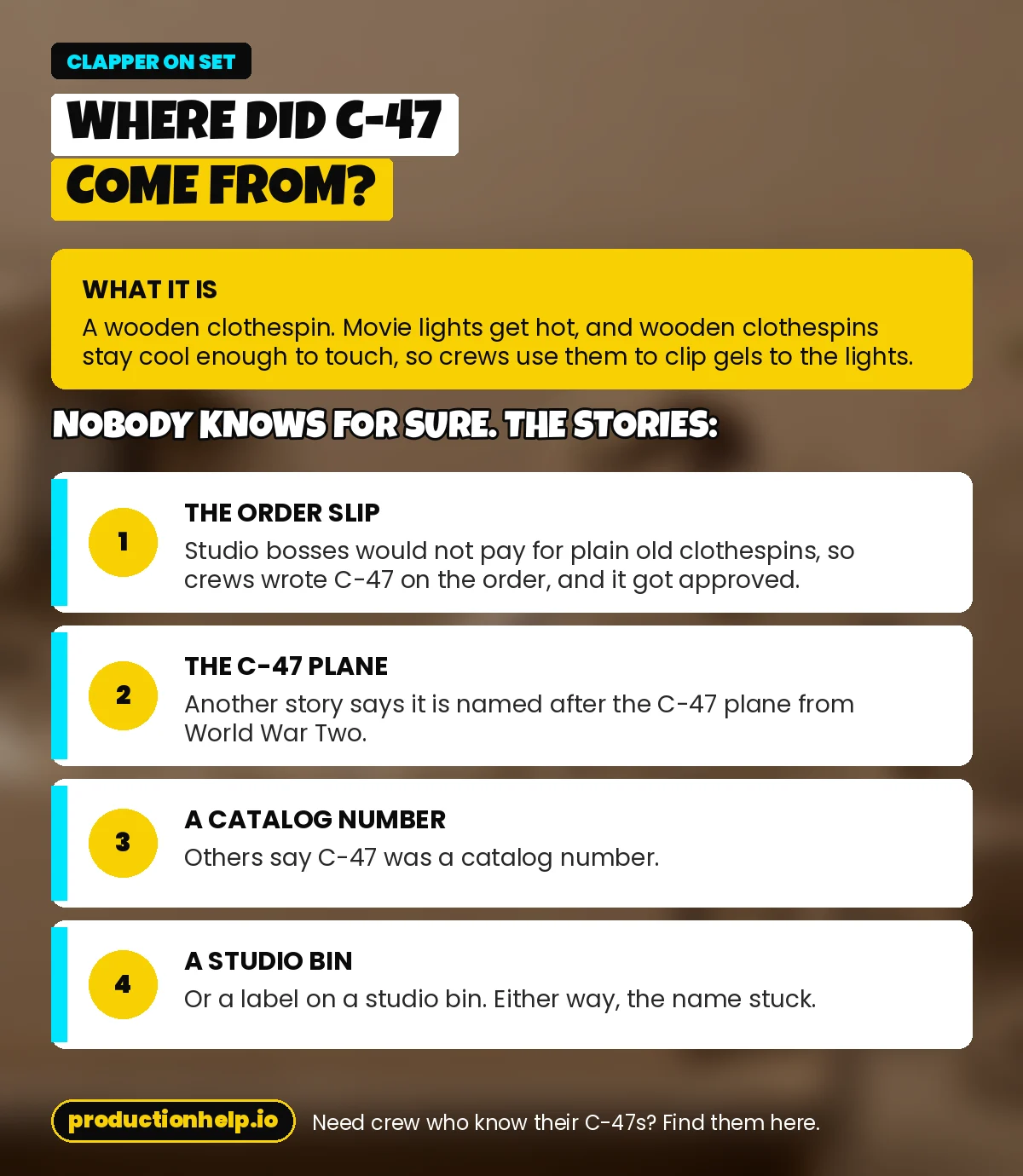
Whichever story you believe, the name stuck. Ask for a C-47 on almost any English speaking film set and someone will hand you a clothespin.
How C-47s fit into the lighting and grip teams
C-47s mostly live with the lighting crew. The gaffer leads the lighting team and decides where gels and diffusion go, and the best boy electric and the electricians on the team put them up. Our guide to what a gaffer does and how the lighting crew works explains who does what. Grips use C-47s too, for quick fixes around set. If you are not sure where one job ends and the other starts, read gaffer vs grip, the difference on a film set, or our overview of what a grip does in film.
Need lighting or grip help for your shoot? You can browse gaffers on ProductionHelp and grip and rigging teams in the directory.
Need crew who know their C-47s?

Need crew who know their C-47s? Find them at productionhelp.io. Whether you need a gaffer, a best boy or a grip, post your job on ProductionHelp and let local crew come to you. You can post a job for free, describe your shoot, and hear from crew in your area. You can also browse the ProductionHelp directory for local crew across departments. If you work in lighting or grip, create a crew profile so producers can find you, and check the job board for productions looking for crew.
Clients post jobs. Crews get hired. Meet at productionhelp.io.
Video transcript
Hey, ever wondered why crews call a clothespin a C-47? To find out, we gotta go back… to the 1940s!
Movie lights get hot. Wooden clothespins stay cool enough to touch, so crews use them to clip gels to the lights.
But why the fancy name? Nobody knows for sure!
One story goes the studio bosses wouldn’t pay for plain old clothespins. So crews wrote C-47 on the order, and it got approved.
Another story says it’s named after the C-47 plane from World War Two!
Others say it was a catalog number, or a label on a studio bin. Either way, the name stuck.
Whatever the story, never call it a clothespin on set! Need crew who know their C-47s? Find them at productionhelp.io!
Clients post jobs. Crews get hired. Meet at productionhelp.io.
Frequently asked questions
What is a C-47 on a film set?
A C-47 is film crew slang for an ordinary wooden spring clothespin. Crews use it to clip gels and diffusion to the barn doors of hot lights, and for many small fixes around set.
Why is a clothespin called a C-47?
Nobody knows for sure. The most told story says studio bosses would not approve orders for plain clothespins, so crews wrote C-47 on the order instead. Other stories point to the Douglas C-47 plane of World War II, a catalog or requisition number, or a studio bin labeled C-47.
Was the C-47 named after the World War II plane?
That is one of the popular stories, but it has never been confirmed. The Douglas C-47 Skytrain was a military transport plane that first flew in December 1941 and was used widely by the Allies in World War II.
Why do crews use wooden clothespins instead of plastic or metal?
Film lights get too hot to touch. Wood does not carry heat well, so a wooden clothespin stays safe to handle. Plastic can melt and metal gets hot.
What else are C-47s called?
Crews also call them 47s, CP47s, pegs, ammo or bullets. In the UK and Australia, pegs is the more common word.
Who uses C-47s on set?
Gaffers, grips, electricians and production assistants often keep a handful clipped to a belt or shirt so they are ready when a gel or diffusion needs to go up.