
Quick answer: On a film set, an apple box is a tough wooden box that grips use to raise people, level gear, and prop up almost anything. Nobody knows for sure why it is called an apple box. One story goes that early crews reused wooden apple crates, flipped them over, and stood on them. Later, shops built stronger boxes in set sizes: full, half, quarter, and a thin one called a pancake.
Watch: why is it called an apple box?
Full, half, quarter, pancake. No, it is not breakfast. It is one of the most useful pieces of gear on any set. This guide covers what an apple box is, the story behind the name, the four sizes, the position names grips use, and where to find a grip crew that brings them.
What is an apple box on a film set?
An apple box is a specialized wooden grip box, not a produce crate. Grips use it to raise an actor for a shot, level camera dolly track, prop up or support gear and furniture, and even as a temporary seat, workbench, or step. The Wikipedia entry on the apple box lists the same kinds of everyday jobs. Boxes are part of the grip department, so if you want to know who handles them, read the difference between a gaffer and a grip or what G&E means in film.
So why is it called an apple box? Nobody knows for sure
We did not find a documented origin for the name. What we found is a story, and it is told below as a story.
The apple crate story
One story goes that early crews reused wooden apple crates. They flipped them over and stood on them. In The Grip Book, Michael Uva says he can only guess, but legend has it that the forerunner of the modern box was a box used to carry apples. The set blog The Black and Blue calls the origin murky.
Matthews Studio Equipment, which makes apple boxes today, tells a related studio story on its apple box page: early productions handed out coffee and apples, and crews reused the empty crates until purpose-built boxes were made. It is a good story, but it is still a story, not a proven origin.
Full, half, quarter, pancake: the four apple box sizes
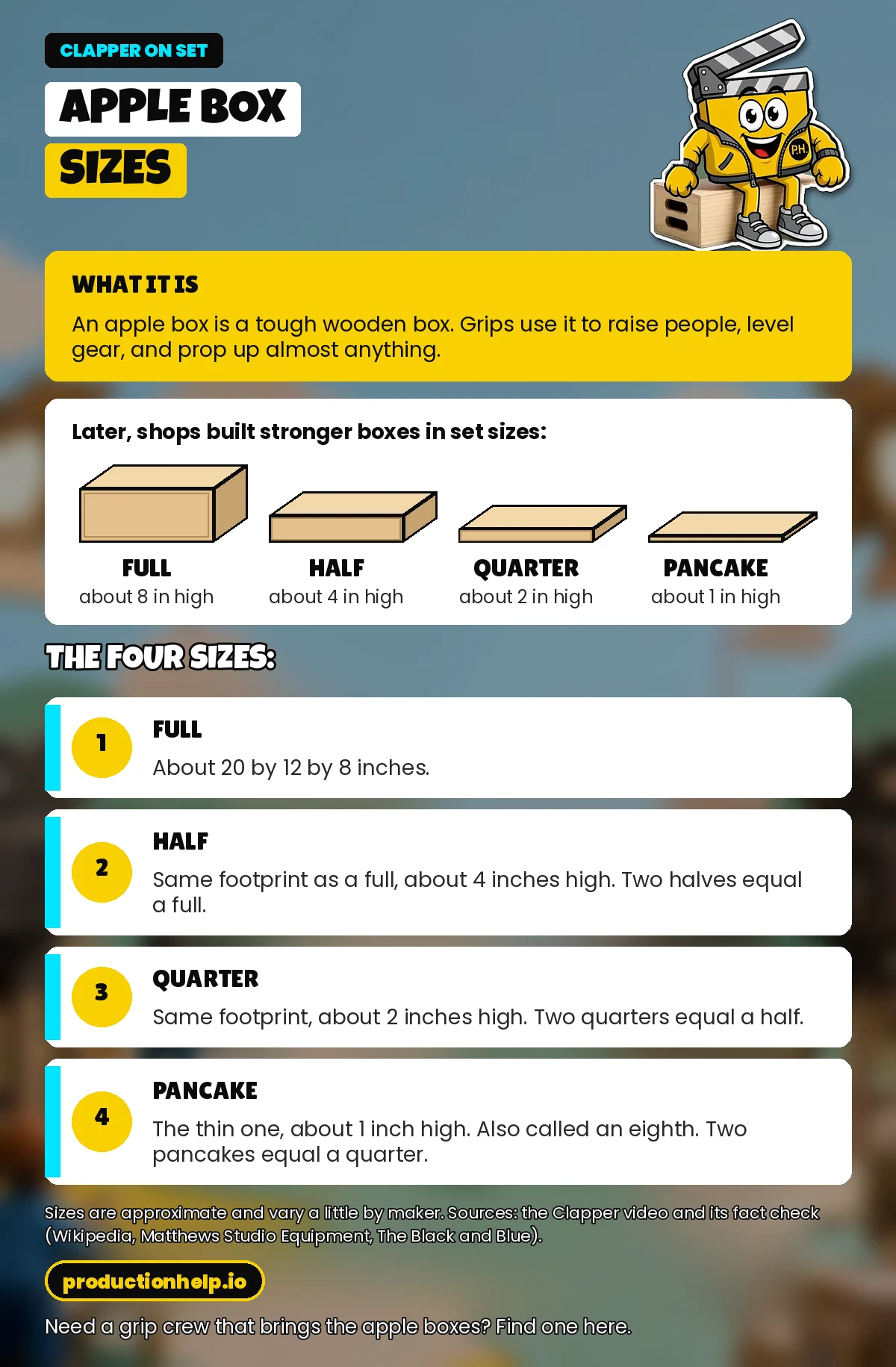
Later, shops built stronger boxes in set sizes. A full apple box is about 20 by 12 by 8 inches. A half has the same footprint and is about 4 inches high. A quarter is about 2 inches high. The thin pancake, also called an eighth, is about 1 inch high. Two halves equal a full, two quarters equal a half, and two pancakes equal a quarter. Sizes vary a little by maker.
New York, Chicago, L.A.: the apple box positions
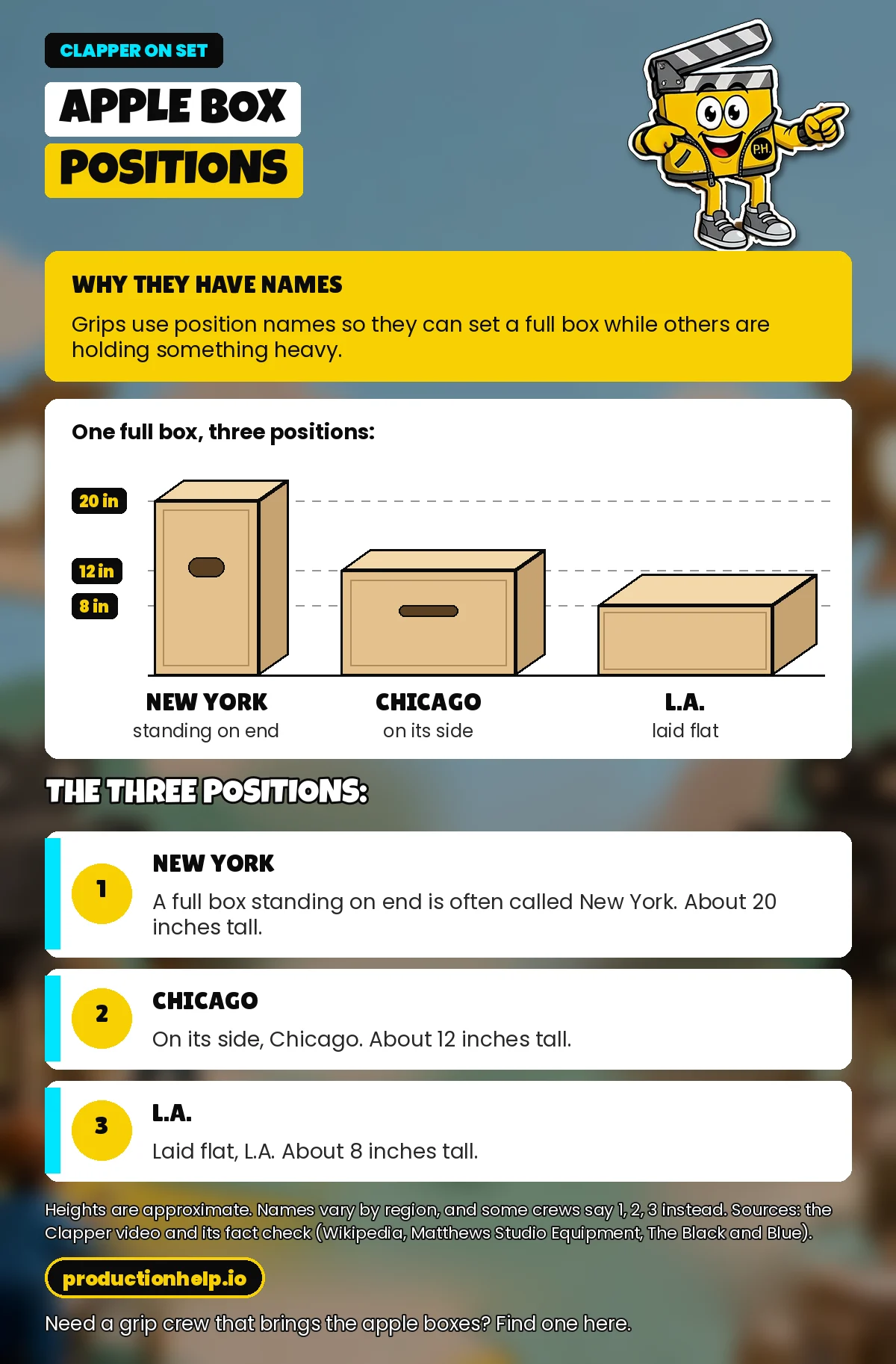
Grips give each way of setting a full box a name, so they can call for the height they need while others are holding something heavy. A full box standing on end is often called New York, about 20 inches tall. On its side, Chicago, about 12 inches tall. Laid flat, L.A., about 8 inches tall. Names vary by region, and some crews use other sets of names such as 1, 2, 3. Matthews keeps a list of grip slang in its Griptionary.
How long have crews called it an apple box?
Longer than you might think. The words “Apple Boxes” appear in camera equipment rental ads in American Cinematographer from 1955, listed under grip equipment. That does not mean 1955 was the first use. It only shows the name was common enough to print in a rental ad by then.
Need a grip crew that brings the apple boxes?
Simple box. So many jobs. If your shoot needs grips, you can browse grip and rigging teams in the ProductionHelp directory, or post a job for free, describe your shoot, and hear from crew in your area. Shooting in Atlanta? Start with grip truck rental in Atlanta. And if you like film set slang, read why an extension cord is called a stinger and why a clothespin is called a C-47.
Clients post jobs. Crews get hired. Meet at productionhelp.io.
Frequently asked questions
What is an apple box on a film set?
An apple box is a tough wooden box that grips use to raise people, level gear, and prop up almost anything. It is a purpose-built piece of grip gear, not a fruit crate.
Why is it called an apple box?
Nobody knows for sure. One story goes that early crews reused wooden apple crates, flipped them over, and stood on them. We did not find a documented origin for the name.
What are the apple box sizes?
Full, half, quarter, and pancake. A full is about 20 by 12 by 8 inches. A half is about 4 inches high, a quarter about 2 inches, and a pancake, also called an eighth, about 1 inch. Sizes vary a little by maker.
What do New York, Chicago and L.A. mean for an apple box?
They are position names for a full box. Standing on end is often called New York, on its side Chicago, and laid flat L.A. Names vary by region.
How old is the term apple box?
Nobody knows when it started. The words Apple Boxes appear in camera equipment rental ads in American Cinematographer in 1955, which shows the name was already in use by then.
How do I find a grip crew for my shoot?
You can browse grip and rigging teams in the ProductionHelp directory, or post your job for free and let local crew come to you. You agree rates, contracts, insurance and payment directly with the crew you hire.