
Quick answer: On a film set, a stinger is a heavy-duty extension cord. Nobody knows for sure why it got that name. One story says the plug “stings” power into the light. Another says electricians already used the word for a live lead, and film crews borrowed it. Neither story has a firm source behind it.
Watch: why is it called a stinger?
Ask for an extension cord on a set and somebody may correct you. The word you want is stinger. This guide covers what a stinger is, why a set cord is not the same as the one in your garage, the stories behind the name, and the safety basics that apply to any cord at work. It also points you to a lighting crew if you are planning a shoot.
What is a stinger on a film set?
A stinger is film slang for an extension cord. The No Film School gaffer’s dictionary defines it as “an industry term for a heavy-duty extension cord.” The lighting and power side of a crew belongs to the gaffer and the electric department, so that is where you will hear the word most. If you want to know who the gaffer’s second in command is, read why it is called a best boy.
The word is not only about cords. Wiktionary lists many meanings for stinger, including a scene shown after the end credits of a film. It also lists “an extension cord” as television and film slang. So a stinger on set and a stinger in a movie theater are two different things.
Why a set cord is not a home cord
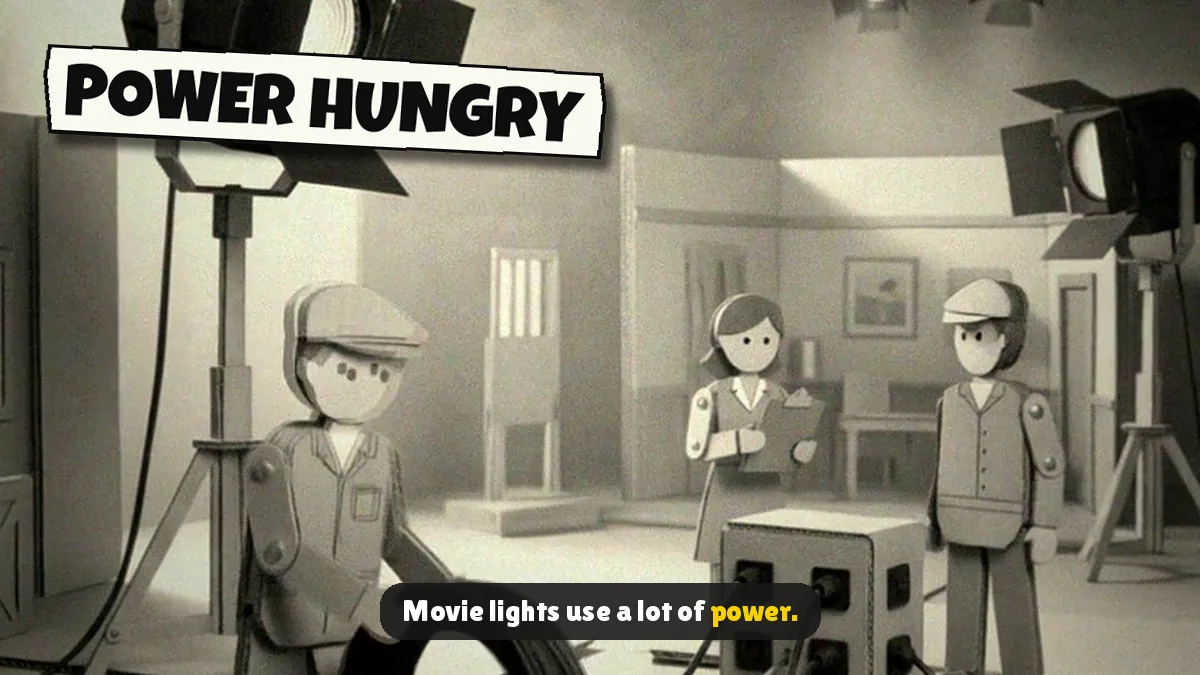
Movie lights use a lot of power. The textbook Lighting for Digital Film, published by SUNY Geneseo, says a bedside lamp at home is around 60 to 100 watts, while lights on a film set run from about 150 watts up to 2,000 watts and more. A cord has to carry that load without getting hot.
The same textbook chapter on electricity says a stinger uses industry-standard cable that can carry the full amp load of professional lighting and tools. Its rating matches a 20-amp breaker, while hardware store extension cords are often rated for only 15 amps and use a smaller gauge. It describes a stinger as typically black, so it does not throw reflected light onto the set, and normally 25 or 50 feet long. It also describes 12/3 wire, which means 12 gauge with three conductors: hot, neutral and ground. The plug ends are Edison plugs made from tough plastic that can survive being unwrapped, used and wrapped up again.

One wrinkle: even that textbook gives two answers on gauge. It calls a stinger 12/3 wire, and later suggests 14 gauge for 25 and 50 foot runs. Read the rating printed on the cord, and ask the electric department before you plug a big light into anything.
So why is it called a stinger? Nobody knows for sure
Here is the part people want and nobody can fully give. We did not find a documented first use of stinger for an extension cord. No dictionary or industry source we read gives a date, an inventor or a studio. What we found are two stories told about set slang, and they are explained below as stories.

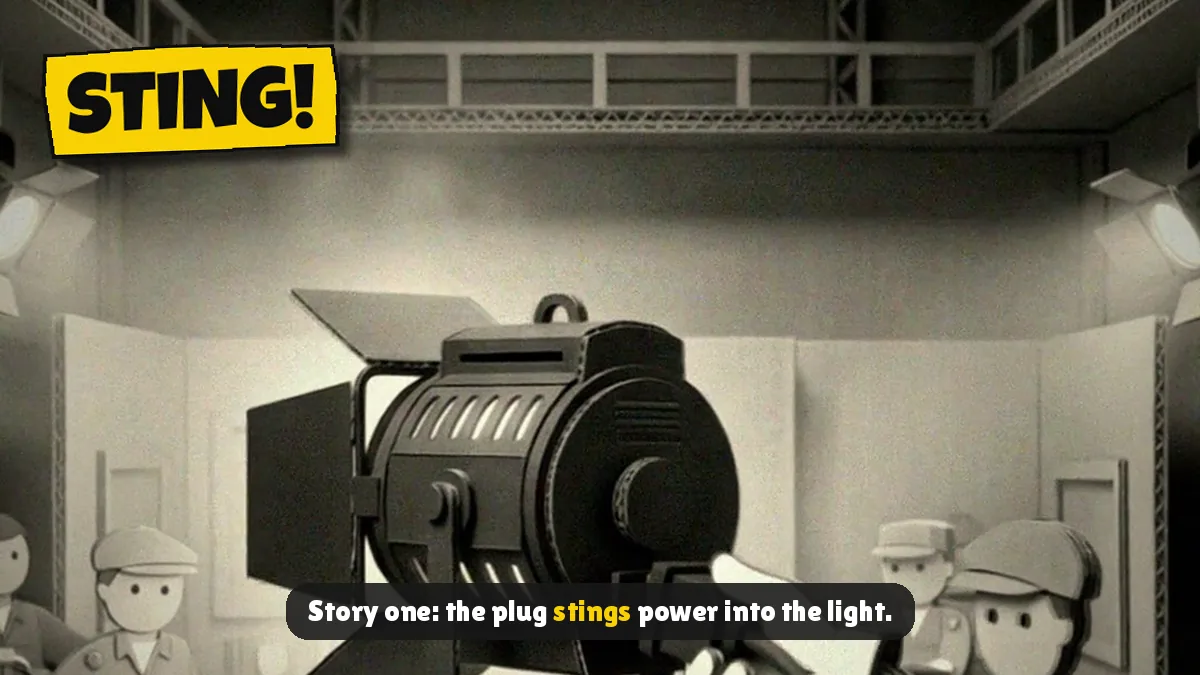
Story 1: the plug stings power into the light
One story you will hear says the plug stings power into the light. It is offered as a likely reason, not a proven one. We did not find a documented first use for it, so treat it as set lore.
Story 2: electricians already used the word
The other story you will hear says electricians already used the word stinger for a live lead, and film crews borrowed it. We could not find a written source that backs that up, so treat it as set lore.
Which story is right? Maybe neither. Slang rarely comes with a receipt.
Use the word, and use the cord safely
Say stinger and you sound like you belong on set. Safety still comes before slang. OSHA’s rule on the use of electrical equipment covers cord sets, which it calls extension cords. It says they should be visually inspected before use on any shift for external defects, such as loose parts, deformed or missing pins, and damage to the outer jacket or insulation. If there is a defect or damage that might expose someone to injury, the cord comes out of service until repairs and tests make it safe. That is a general workplace standard, so check what applies to your shoot, and ask your gaffer how the crew handles cords.

The same OSHA section says flexible cords may not be fastened with staples or hung in a way that could damage the outer jacket or insulation, and that a cord used with grounding-type equipment must contain a grounding conductor.
Need a lighting crew for your next shoot?
Looking for a lighting crew for your next film or your next project? Find one at productionhelp.io. You can browse gaffers in the ProductionHelp directory, or post a job for free, describe your shoot, and hear from crew in your area. If you are shooting in Atlanta, start with hiring a gaffer or renting lighting and grip in Atlanta. And if you like film set slang, here is another one: why a clothespin is called a C-47.
Clients post jobs. Crews get hired. Meet at productionhelp.io.
Frequently asked questions
What is a stinger on a film set?
A stinger is film set slang for a heavy-duty extension cord. It is the cord that carries power from an outlet or a distribution box to a light or other gear on set.
Why is it called a stinger?
Nobody knows for sure. One story says the plug stings power into the light. Another says electricians already used stinger for a live lead and film crews borrowed it. We did not find a documented first use for either one.
Is a stinger the same as an extension cord?
A stinger is a kind of extension cord, but crews mean a heavy-duty one. A textbook from SUNY Geneseo says a stinger is built to carry the full amp load of professional lighting, while hardware store cords are often rated for only 15 amps.
What color is a stinger?
Stingers are typically black, according to the SUNY Geneseo textbook, so they do not reflect light onto the set.
What else does stinger mean in film?
Wiktionary lists a scene shown after the end credits of a film as one meaning of stinger. It lists extension cord as television and film slang. The two are different things.
How do I find a lighting crew for my shoot?
You can browse gaffers in the ProductionHelp directory, or post your job for free and let local crew come to you. You agree rates, contracts, insurance and payment directly with the crew you hire.