
Quick answer: On a film or TV crew, the gaffer is the head lighting person, also called the chief lighting technician or the head electrician. The name is much older than movie sets. One story says it comes from godfather, shortened to gaffer, an old English word for a boss or foreman. Another story says early crews used a long hooked pole, a gaff, to move canvas and lights overhead. Nobody knows which story is the true one. Either way, sources place the job title on movie sets by the 1920s, and the name stuck.
Watch: why is it called a gaffer?
If you have spent a day on a film set, you have probably heard someone called the gaffer. The title still confuses new crew and clients. This guide covers what the word means on set, the stories behind the name, and when it shows up as a movie job title. For a full look at the job itself, including how the lighting crew is organized, read what a gaffer does. If you are trying to tell lighting and rigging apart, see gaffer vs grip, the difference on a film set.
What is a gaffer on a film set?
On film and television crews, the gaffer, also called the chief lighting technician, is the head electrician. The Wikipedia entry on the occupation describes the gaffer as the person responsible for the execution, and sometimes the design, of the lighting plan. The gaffer usually works under the director of photography, and the gaffer’s assistant is the best boy electric.

That is the job. The rest of this article is about the name.
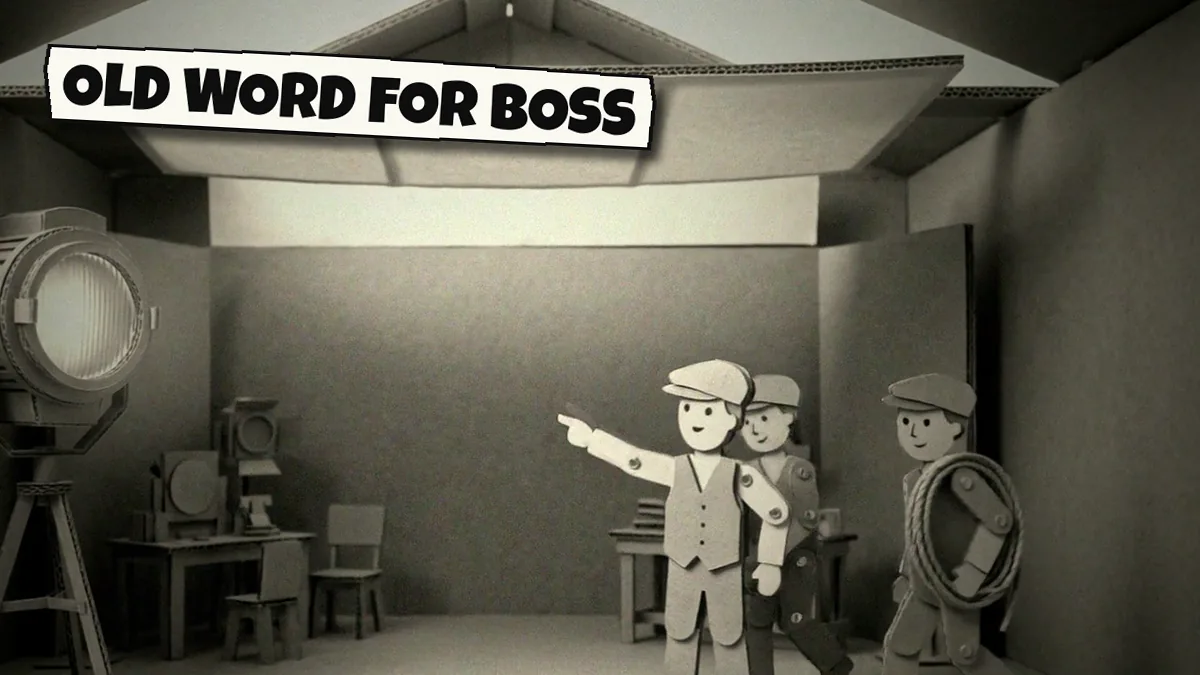
So why is it called a gaffer? Nobody knows for sure
The word itself is much older than Hollywood. Etymonline traces gaffer to the 1580s, as a word for an elderly rustic, apparently a contraction of godfather, and first used as a term of respect. From “old man,” it says, the word was extended by 1841 to foremen and supervisors. That supervisor sense, it adds, carried over in the early 20th century to the electrician in charge of lighting on a film set.
The Oxford Advanced Learner’s Dictionary still lists both uses: an informal British word for a person in charge of a group, and the person in charge of the electrical work and the lights when a film or television program is being made. Its word origin note says late 16th century, originally meaning an old man, and probably a contraction of godfather.
Those dictionary notes explain how an old word for a boss could become a film job title. They do not settle every story you will hear on set. Wikipedia, citing the Oxford English Dictionary and a 1994 book by Eric Taub, says there are several possible explanations, and it treats the gaff-pole account as one possibility, not a proven fact. Members of IATSE Local 728, the studio electrical lighting technicians’ union, have told both kinds of story on the local’s Lighter Side of Lighting page. Those are recollections, not a dictionary ruling. The two stories are laid out below as stories.
Story 1: it comes from godfather, shortened to gaffer
One story goes that gaffer comes from godfather, shortened over time, and then came to mean the person in charge, kind of like the boss of the crew. That lines up with what Etymonline and the Oxford Learner’s Dictionary report about the older English sense. A retired Local 728 member, writing on that same union page, remembered the word as old English for “the old man as in the boss or straw boss or foreman.” Treat the jump from that older meaning to the film job title as a story with dictionary support behind the older sense, not as a document that names the first person who used it on a set.
Story 2: the gaff pole
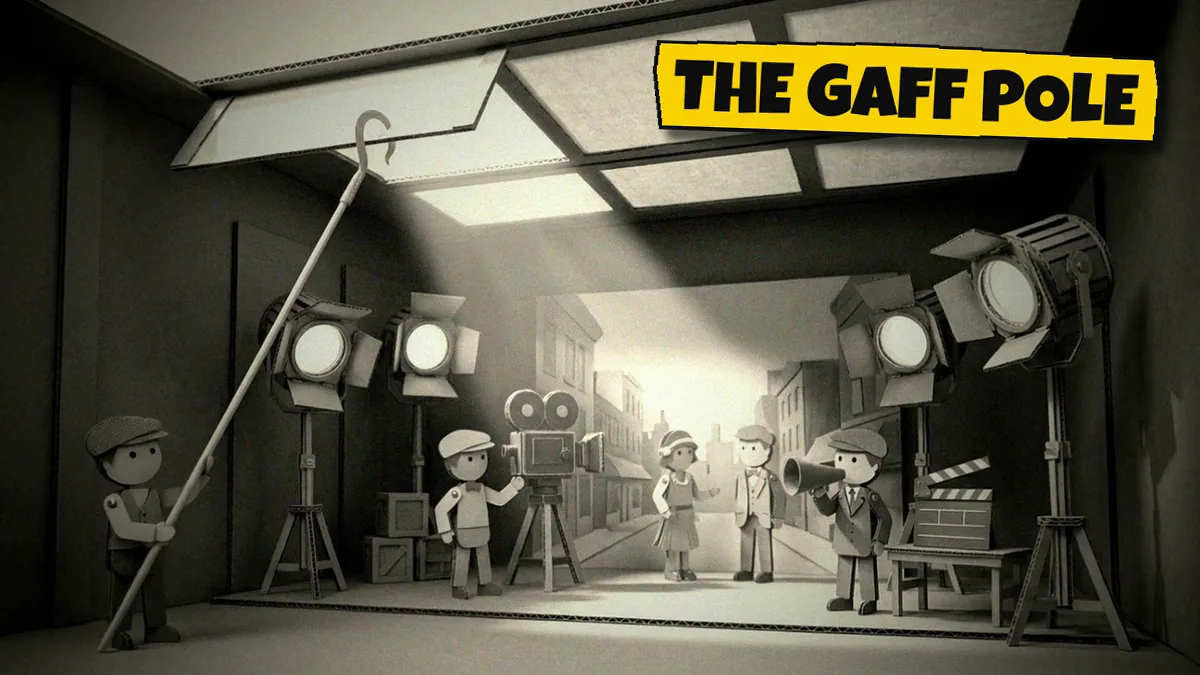
Another story says early crews used a long hooked pole, a gaff, to move canvas and lights overhead. Wikipedia, citing Eric Taub’s book Gaffers, Grips, and Best Boys (1994), describes this as one possibility: a long pole with a wide grappling hook, called a gaff, used to move overhead equipment, or, in earlier theatre, lighting louvres. On the Local 728 page, a member recalled early silent-film stages with open sections of roof, and a technician using a long pole with a gaff hook to slide canvas across the opening and let more or less sunlight in. In that telling, the person who controlled the light for the shot was “the gaffer.”
That is a popular story with some lighting crews. It is still a story. Another member on the same page has argued that a gaff hook or gaffing pole has nothing to do with the job title, and pointed back to the old English word for the boss. Dictionaries lean toward the foreman or godfather sense. We have not independently reviewed Taub’s book, so treat that citation as Wikipedia’s reference.
Which story is the true one? Nobody knows for sure. Maybe neither is complete. Job titles rarely come with a receipt.
By the 1920s, the chief electrician was the gaffer
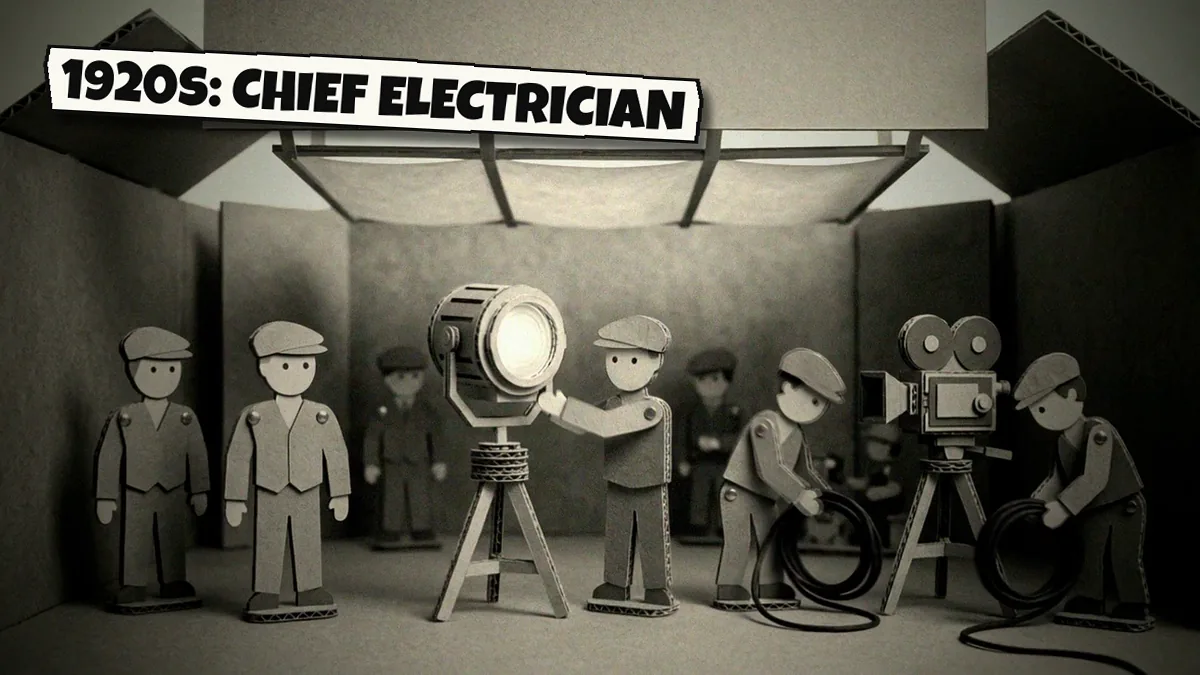
Either way, the film-set use of the title is documented from the 1920s. Wikipedia, citing the Oxford English Dictionary, says the word has been applied specifically to the chief electrician on a film set since the 1920s, and that the dictionary includes a citation from Picture-Play Magazine in 1926. It also points to a 1929 book, The Hands of Hollywood by Mary Eunice McCarthy. We have not independently reviewed the original magazine page or that book, so treat those dates as citations, not as pages we opened ourselves.

The name stuck. Today you will still hear gaffer on lots of sets, alongside chief lighting technician. The person in the job still runs the lighting and power work. For more on how that department works day to day, go back to what a gaffer does. And if you like film set slang, here is another one from the same department: why an extension cord is called a stinger.
Need a qualified gaffer for your next project?
Need a qualified gaffer for your next project? Find one at productionhelp.io. You can browse gaffers in the ProductionHelp directory, or look at the lighting department listings if you need more of the crew. You can also post a job for free, describe your shoot, and hear from crew in your area. If you are shooting in Atlanta, start with hiring a gaffer or renting lighting and grip in Atlanta. If you work as a gaffer, create a crew profile in the ProductionHelp directory so producers can find you, and check the job board for productions looking for crew.
Clients post jobs. Crews get hired. Meet at productionhelp.io.
Frequently asked questions
What is a gaffer on a film set?
A gaffer is the head lighting person on a film or TV crew, also called the chief lighting technician or the head electrician. The gaffer executes the lighting plan, usually under the director of photography, and is helped by the best boy electric.
Why is it called a gaffer?
Nobody knows which origin story is the true one. One story says the word comes from godfather, shortened to gaffer, an old English word for a boss or foreman. Another says early crews used a long hooked pole, a gaff, to move canvas and lights overhead. Dictionaries lean toward the older boss or godfather sense.
When did film crews start using the title gaffer?
Sources place the job title on movie sets by the 1920s. Wikipedia, citing the Oxford English Dictionary, points to a Picture-Play Magazine citation from 1926, and to a 1929 book, The Hands of Hollywood. We have not independently reviewed those original pages.
What is the difference between a gaffer and a grip?
The gaffer leads the lighting and power team. A grip, led by the key grip, handles the non-electrical side: stands, flags, silks, rigging and camera support. For a full side-by-side, read gaffer vs grip, the difference on a film set.
Is a gaffer the same as a chief lighting technician?
They are two names for the same role. Gaffer is the traditional set title. Chief lighting technician is a more formal credit you will also see.
How do I find a gaffer for my shoot?
You can browse gaffers and lighting department listings in the ProductionHelp directory, or post your job for free and let local crew come to you. You agree rates, contracts, insurance and payment directly with the crew you hire.